Healthcare
Digital Transformation for Tier-2 & Tier-3 Hospitals: Website, Trust, Appointments and Patient Experience
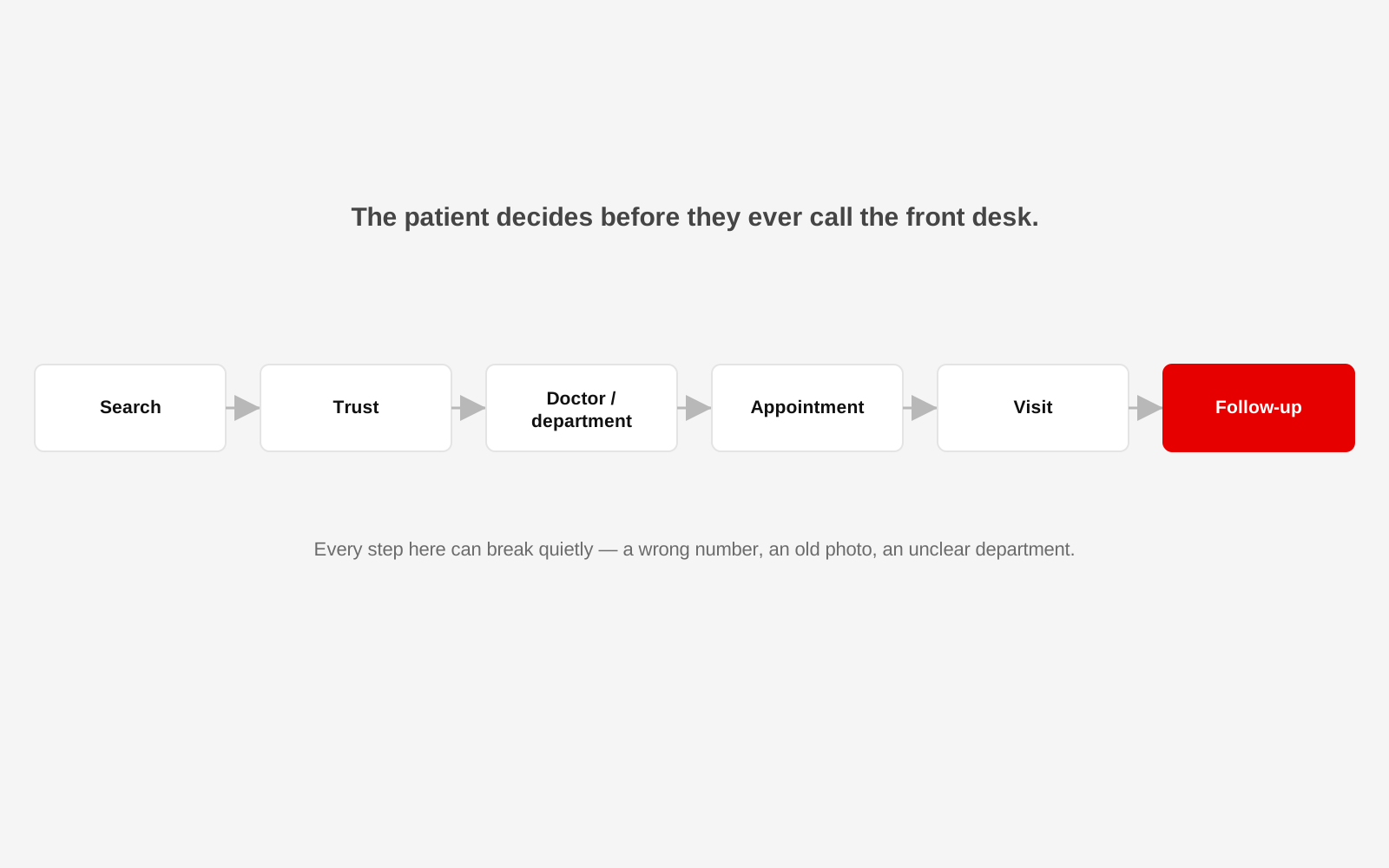
It is past ten at night, and someone's father has had chest pain for an hour. The family is choosing between the nursing home ten minutes away and the hospital forty minutes further that says its cardiology department is "available." They make that decision on a phone, before anyone picks up at the front desk.
A hospital can earn or lose that trust before a single conversation happens. People search the name, check the doctors, look at photos, read reviews, compare departments, and try to find an emergency number. For hospitals in Tier-2 and Tier-3 cities, this matters even more, because families are often weighing local care against a bigger name in the metro. Digital transformation in healthcare does not begin with an app. It begins by making a worried person feel like they can trust what they are looking at.
Why a good hospital can still look untrustworthy online
A hospital can have strong doctors, real equipment and a capable staff, and still read as uncertain the moment someone opens its website. The usual culprits are familiar: an outdated design, branding that does not match what is on the building, missing doctor profiles, unclear departments, an old phone number nobody updated, an appointment form that breaks on a phone, social media that feels disconnected from the actual hospital, and no clear emergency information. None of this is cosmetic. People use exactly these details to decide where to bring someone they love.
Put the facts where an anxious person can find them
A hospital website has one real job before anything else: make the important facts easy to verify. Departments, doctors and their qualifications, consultation timings, how to book, the emergency number, the address and map, what diagnostics are available, visiting hours, and payment or insurance information. A frightened visitor should not have to read a paragraph of promotional language to find a phone number.
Patients also arrive with a specific task, not a browsing mood: "I need a paediatrician." "Is the emergency department open right now?" "Where exactly is this place?" The site's structure should answer those questions directly instead of making people guess which menu they are hiding under.
Studio 1947's work with Avishkar Women & Children Hospital in Asansol treated the website this way: as a trust and access tool first. Departments, emergency information and the appointment path were surfaced immediately, so a visitor never had to learn the hospital's internal structure just to get help.
Keep the appointment form short and honest
An appointment form should collect only what is needed to schedule care: name, phone number, department or doctor, a preferred date, and a short note if that helps. Detailed medical information belongs in a proper clinical intake, handled under real data-protection practice, not gathered casually through a marketing form. And once someone submits it, tell them what happens next. Will someone call? Is the slot confirmed already? Should they arrive early? Uncertainty after the click is still uncertainty.
Assume the phone, not the desktop
Most hospital searches happen on a phone, often from someone who is travelling, worried, or standing in for a family member who cannot search for themselves. Tiny buttons, slow pages and buried phone numbers are not small annoyances in that moment, they are real friction. Make the phone number tappable. Keep emergency actions visible without scrolling. Skip the oversized hero video that delays the one fact someone actually came for. A hospital site does not have to look plain, but it has to stay legible under stress.
Make sure the map agrees with the website
The website is only one surface of a hospital's digital presence. The Google Business Profile, the map pin, and any other public listing need to say the same thing: name, address, phone number, hours, and department details where they appear. When two sources disagree, the patient is left to guess which one is current, at exactly the wrong moment to be guessing.
Let social media answer real questions
Hospital social media too often turns into a stream of festival greetings and generic health posters. It could do more useful work: introducing doctors, explaining when to see which department, sharing real updates, answering the questions patients actually ask at reception. Any clinical claim still needs sign-off from a qualified professional, but the design can make official information instantly recognisable without every post looking like a template filled in twice a week.
Treat it as one system, not five disconnected channels
The website, the appointment flow, the social pages, the map listing and the front desk should not behave like separate organisations. If the website lists one number and Google lists another, the digital transformation has already failed at its most basic promise. Pick one source of truth for public information and give someone the job of keeping it current. It is the same discipline that multilingual patient information quietly loses the moment a translated page falls out of date and nobody notices.
Measure what actually reduces friction
Followers and page views are not the point. What matters is whether appointment forms get completed, whether calls come in from the website, what people search for once they land, which service pages get the most visits, where forms fail, and what questions keep coming up at reception anyway. The goal was never to make the hospital more visible. It was to make getting help less confusing.
Start where it hurts, not everywhere at once
Digital transformation does not mean replacing everything in one project. For one hospital, the biggest friction is a genuinely broken website, which is the same redesign planning question any organisation eventually faces. For another, it is appointment booking, or local search, or simply getting the phone number to match everywhere. The right place to start is wherever the current patient journey is losing people, not wherever looks most impressive to fix first.
The real work happens before anyone reaches the front desk
A hospital's website is not a brochure sitting next to the real work. For a lot of patients, it is the first room they walk into, and the first place they decide whether to trust what happens next. None of this is really about technology. It is about not adding confusion to someone's worst week, at the exact moment they can least afford it. That is a strange thing to ask a website to do, and also, quietly, one of the most important.
Studio 1947 works across healthcare brand systems, websites, information architecture and digital patient journeys. Our work with AWCH in Asansol is one example of that approach. See our Data, Design & Tech and Communication & Campaign work, or discuss your hospital's digital experience.