Research & Evidence
Baseline & Endline Surveys: How NGOs Can Build Evidence Funders Trust
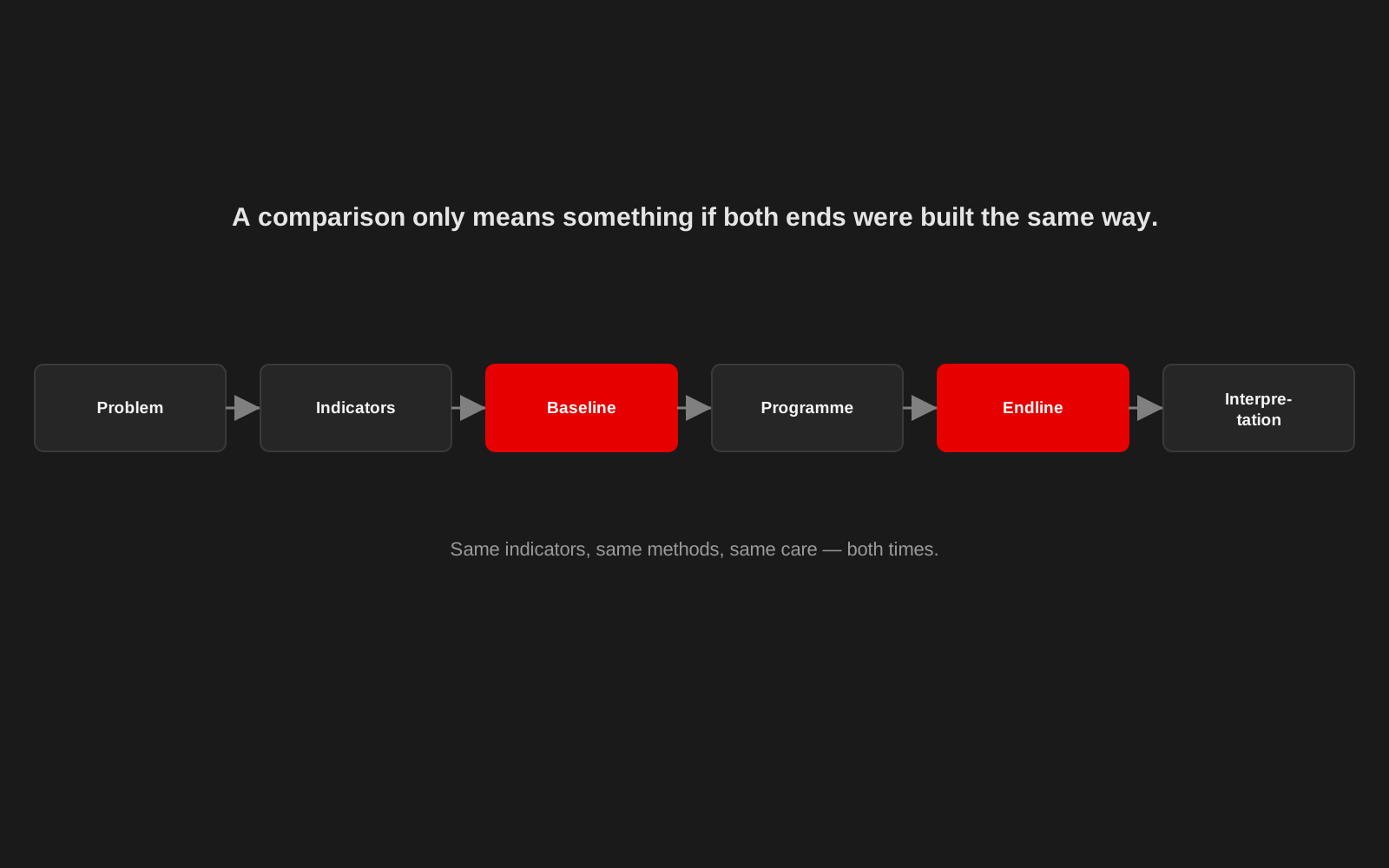
A baseline survey is not useful because it happens at the beginning of a project. It is useful because it creates a reference point that can be compared with what happens later.
An endline survey has the same problem in reverse. Collecting another round of data does not automatically show impact. The two studies need to be designed so the comparison means something. For NGOs and development programmes, that requires clear indicators, a defensible sample, consistent field methods and careful interpretation.
Begin with the programme question
Do not begin by writing survey questions. Begin by asking what the programme is trying to change. If a livelihoods project wants to improve income stability, what would meaningful change look like? If a training programme wants to improve employability, what can actually be measured? A baseline questionnaire should follow the theory of change and indicators. It should not become a collection of every question someone finds interesting.
Define indicators before fieldwork
An indicator should be clear enough that two analysts calculate it the same way. Document the indicator name, definition, unit, numerator and denominator where relevant, source, frequency, disaggregation, exclusions and the responsible person. If the definition changes between baseline and endline, comparison becomes difficult.
Ask only questions that serve a purpose
Long surveys create fatigue for respondents and field teams. Every question should have a reason to exist. Ask which indicator each question supports, whether the answer will change a programme decision, and whether the field is required for analysis or reporting. If nobody can explain how a field will be used, consider removing it.
Sampling should follow the claim you want to make
A survey of easily accessible households may be convenient, but it may not represent the programme population. Sampling becomes especially difficult in hills, tea gardens, remote settlements and scattered communities where distance and access affect who can be reached. The sample design should consider the population frame, geography, programme coverage and relevant subgroups. There is no universal sample size that is automatically "fundable" or "credible." The right method depends on the question, population and level of precision required. For formal evaluations, involve a qualified research or statistical specialist in the design.
Pilot before the real survey
A questionnaire that looks clear in a spreadsheet can behave very differently in a household conversation. Pilot the survey with people similar to the intended respondents, and watch for confusing wording, translation problems, questions that feel intrusive, answer options that do not fit reality, sections that take too long, skip logic errors, and questions people interpret differently. Fix these before full fieldwork.
Train for the conversation, not only the form
A fieldworker can know which button to press and still collect weak data. Training should include the purpose of the research, question intent, ethical engagement, informed consent, neutral probing, handling refusal, privacy, device use, and escalation when something goes wrong. Studio 1947's field research work with Mirik College combined classroom learning, survey practice and direct household engagement in tea plantation communities near Mirik. One lesson from work like this is simple: field quality depends on how people ask and listen, not only on the questionnaire design.
Keep baseline and endline methods comparable
If possible, keep core questions, definitions and measurement conditions consistent, and document changes when they are unavoidable. If the endline uses different answer categories or a different age range, analysts need to know that before comparing percentages. Consistency is not about refusing to improve the tool. It is about understanding the effect of changes on comparison.
Build quality checks into collection
Do not wait until fieldwork ends to discover a problem. Useful checks include missing required values, duplicate IDs, impossible ranges, unusual interview duration, location mismatches, high refusal or skip rates, enumerator-level patterns, and daily review of submissions. It is the same discipline that keeps an M&E dashboard trustworthy once fieldwork moves into ongoing monitoring. Early review allows the team to correct misunderstandings while fieldwork is still happening.
Separate change from attribution
Suppose an outcome improves between baseline and endline. That shows change. It does not automatically prove the programme caused all of it. Seasonality, policy changes, economic conditions and other programmes can matter too. The evaluation design should match the strength of the causal claim being made. Be precise in reporting. Honest limitations build more trust than inflated certainty.
Make the final evidence usable
The output should not be only a spreadsheet and a long report. Different audiences may need different formats: detailed methodology for researchers, a concise summary for programme leaders, clear charts for funders, location-level findings for field teams, a dashboard for ongoing monitoring, and community feedback where appropriate. Research becomes more valuable when the people making decisions can understand it, which is exactly the problem of turning findings into a report donors actually read.
What funders are likely to trust
There is no visual trick that makes a weak study credible. Trust comes from being able to explain why the survey was conducted, how participants were selected, what the questions measured, how data quality was checked, what changed, what did not change, and what the study cannot conclude. That is stronger than presenting every result as a success.
Good evidence starts before the first survey form is opened
Studio 1947 works across research design, field data collection, analysis, dashboards and communication. We can help shape the full evidence flow rather than treating the survey as an isolated task. See our Research & Survey work, or discuss your research or survey.