Web & Digital Products
NGO Website Design in India: What a High-Trust Nonprofit Website Actually Needs
An NGO website has to do several jobs at once. It may need to help a donor understand the organisation, help a person find support, give a journalist reliable information, give a partner access to reports and make it easy for a volunteer to get involved.
That is why a good NGO website is not simply a smaller version of a corporate website. The central design question is trust. Can a first-time visitor understand who you are, what you do, where you work and why they should believe you?
Make the organisation understandable in one minute
A visitor should not need to read an annual report to understand the organisation. The homepage should quickly answer: what problem do you work on, who do you work with, where do you work, what do you actually do, what evidence of impact can you show, and what should the visitor do next?
Avoid mission statements that sound impressive but reveal very little. "Empowering communities through sustainable solutions" could describe hundreds of organisations. Specific language is stronger. Say what you work on, with whom and where. When Studio 1947 built the Jan Sahas Social Empowerment Society website, the homepage led with the organisation's actual focus areas, mental health, women's livelihood and migrant resilience, rather than a general statement about empowerment.
Design for more than the donor
NGO websites often become donor-facing because funding teams are involved in the redesign. Donor credibility matters, but the website may also serve people seeking help, and these audiences can have very different needs.
A funder may want governance documents, programme results and financial information. A person in distress may need a phone number in ten seconds. Those journeys should not compete with each other. Put urgent or essential actions where people can find them quickly.
Show evidence, not only claims
Trust grows when visitors can see how an organisation works. Useful evidence may include:
- programme results and geographic reach;
- annual reports and audited financial statements where appropriate;
- board and leadership information;
- partner organisations, research and publications;
- case studies and verified contact details.
Numbers are useful when they have context. "10,000 people reached" means little if the reader cannot understand what "reached" means. Explain the programme, period and outcome behind the number, and where the data comes from. See presenting programme data clearly is its own discipline, separate from the website work itself.
Make reports easy to find and easy to understand
NGOs often have years of strong research hidden inside a page called "Resources" with a long list of PDFs. That makes useful work difficult to discover. Group publications by theme, programme or year. Give each report a clear title, short summary and relevant metadata. Where possible, create an HTML summary page so people and search engines can understand the report before opening the PDF. It is the same thinking behind making reports easier to discover and understand once they exist.
Build a donation journey around confidence
A donation page should answer basic questions before asking for money. Who receives the donation? What will it support? Is the payment process secure? Will the donor receive confirmation? Where can they find organisational and compliance information?
Keep the form simple. Do not ask for information you do not need. For Indian NGOs, tax and foreign contribution requirements can affect donation flows. These should be implemented with advice from the organisation's qualified legal and accounting professionals; the website's job is to make the approved process clear, not to interpret the law.
Treat mobile performance as a service issue
For many organisations, mobile is not a secondary experience. A beneficiary may be using a low-cost phone. A field worker may be opening the site while travelling. A donor may arrive from WhatsApp or social media. Large images, auto-playing video and heavy scripts can turn a useful site into a frustrating one. Optimise the most important journeys first.
Make the site maintainable by the team that owns it
A website is not successful if the NGO needs a developer for every text edit. During planning, ask who will publish updates, who owns programme information, who approves changes, how often reports are added, and who checks broken links and forms. The content system should match the organisation's capacity. A technically sophisticated CMS that nobody feels confident using is not a good system.
Accessibility is part of inclusion
NGOs often work explicitly around inclusion, rights or public service. The website should reflect those values: readable type, sufficient contrast, logical headings, keyboard-friendly interfaces, clear form labels and meaningful alt text. Avoid hiding critical information inside graphics. Where the audience uses multiple languages, language access should also be considered early.
A practical NGO website structure
There is no universal sitemap, but a useful starting point is: Who We Are, Our Work, Where We Work, Our Impact, Resources, Governance, Get Involved, Get Help where relevant, and Contact. The final structure should come from the organisation's users and content rather than a template.
What makes an NGO website feel trustworthy?
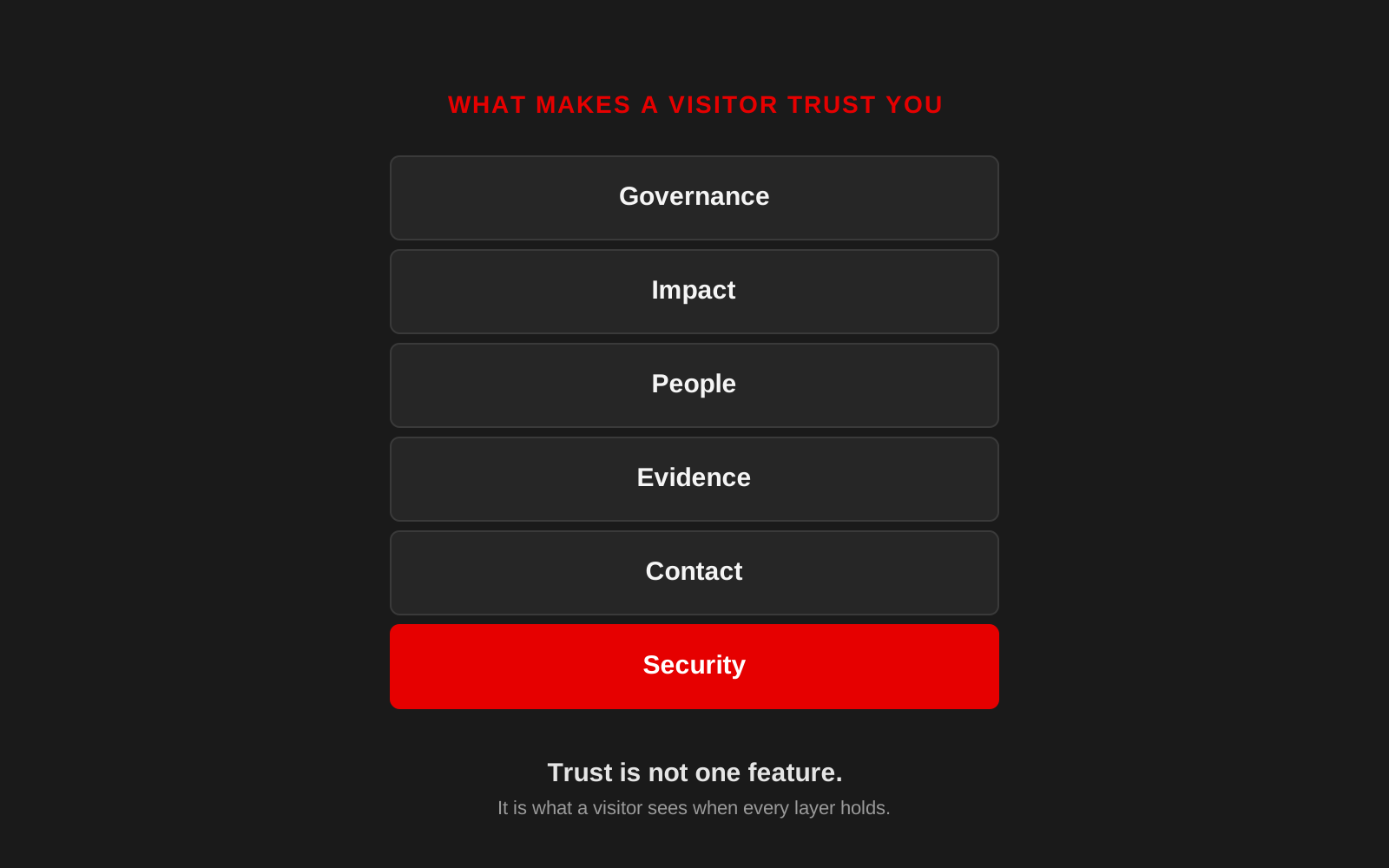
It is rarely one dramatic feature. Trust comes from consistency. The organisation says clearly what it does. The team is visible. Reports are current. Contact details work. Images are used with dignity. Impact claims have context. The mobile site works. The donation journey is clear. Information is not hidden behind vague language. That is more useful than adding another animation to the homepage.
Your NGO website should help people understand the work, not make them work to understand it
Studio 1947 works across research, information architecture, communication design and web development to build digital platforms around real organisational needs. See our Data, Design & Tech and Communication & Campaign work, or discuss your NGO website.