Design & Communication
How to Plan a Campaign Around Business Outcomes, Not Likes and Impressions
A campaign can rack up impressive numbers, reach, likes, shares, and still fail to move the thing that actually matters to the organisation running it. Attention is not the same as outcome, even though it is much easier to report.
Planning around outcomes means deciding, before a single asset is designed, what the campaign is actually meant to change: enquiries, applications, donations, bookings, awareness among a specific group, or something else concrete.
Start with the outcome, then work backwards
Instead of asking, "What should the posts look like?", start with, "What do we want more people to do after this campaign?" A college wants more qualified applications. A hospital wants more people to know which department to call. A tourism business wants more direct enquiries. That outcome should shape the creative, the channels and the message, not the other way round.
Reach and awareness still matter, as a stage, not the goal
Nobody takes an action they have never heard of, so awareness has a real role early in a campaign. The mistake is treating awareness metrics as the finish line rather than the first stage of a longer path towards an actual outcome.
Pick metrics that match each stage
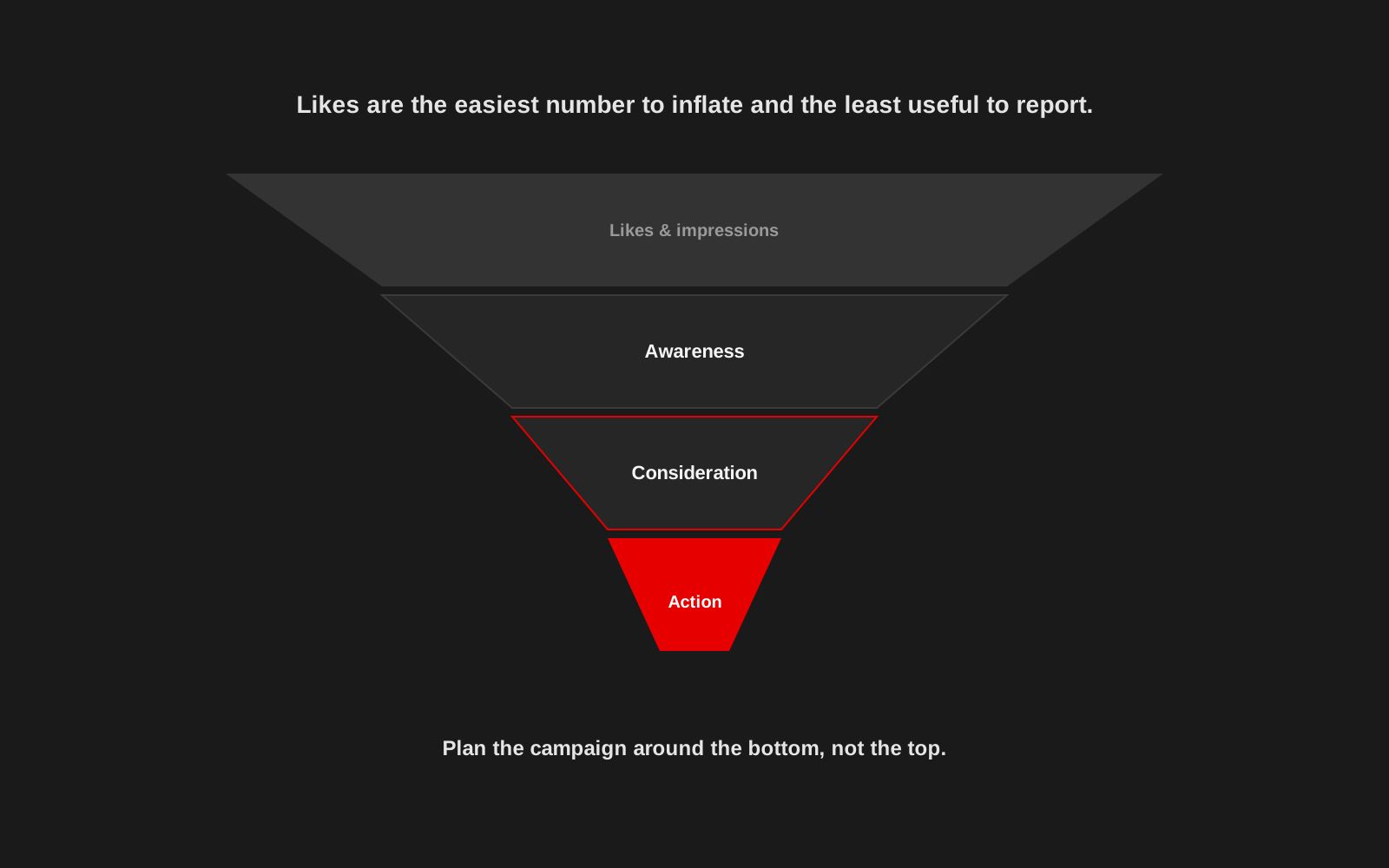
Reach and impressions can reasonably describe the top of a campaign. Click-throughs, saves and enquiries describe the middle. Applications, bookings, donations or sign-ups describe the bottom, and the bottom is usually what the organisation actually cares about. Reporting only the top of that funnel flatters the campaign without describing what it achieved.
Design creative for the action, not just the scroll
A post can be beautiful and still fail to tell anyone what to do next. If the outcome is an enquiry, the path to enquiring should be obvious: a clear next step, a working link, a phone number that is easy to find. Creative that only aims to be liked tends to optimise for the wrong stage of the funnel.
Match the channel to where the outcome actually happens
A channel that generates strong engagement is not automatically the right channel if the people who take the desired action are somewhere else. A campaign can look successful on the platform where it was posted and still miss the audience that would have actually enquired, applied or booked.
Set the target before the campaign, not after
A number chosen after seeing the results will always look reasonable. Agreeing on what a good outcome looks like before launch, even roughly, gives the team something honest to measure against rather than a moving target set in hindsight.
Track the full path, not just the launch moment
An outcome-focused campaign should be checked against what happened afterwards: did enquiries actually rise, did applications increase, did the phone start ringing about the right thing. This is uncomfortable when the answer is no, and it is exactly the discomfort a likes-only report avoids. Studio 1947's work on Bhagirath Homestays, which moved from no online presence to real, trackable bookings, and the bilingual campaign work for Walking Project, both were judged by what people actually did, not by how the posts performed on their own.
Outcomes over impressions is a discipline, not a slogan
It is easy to say a campaign should focus on outcomes and much harder to actually resist reporting the easy, flattering numbers when the outcome numbers are less exciting. Building the habit of reporting both, honestly, is what makes the next campaign better than the last one.
Plan the campaign around the bottom, not the top
Studio 1947 works across communication and campaign design to build work judged by what people actually do, not only how it performs on the feed. See our Communication & Campaign work, or talk to us about your next campaign.