Walking Project
Walking Project is a citizen-led movement working to give everyone in the Mumbai Metropolitan Region a safe, convenient and joyful walk. Founded in 2012, the collective maps footpaths, audits pedestrian infrastructure, runs neighbourhood walkability teams across the city, and pushes civic bodies to build the sidewalks Mumbai's millions of walkers deserve. A minimum agenda for the maximum city.
Studio 1947 worked with Walking Project on two fronts: a social media system that turns footpath data into campaigns people feel and share, and a redesign of their website so a decade of advocacy reads as one clear, credible movement.
The Brief: Make Walkability Impossible to Ignore
Nearly half of Mumbai moves on foot, yet pedestrians are the city's most invisible group. Walkability data sat in reports and spreadsheets: accurate, urgent, and unread. The movement needed posts that could stop a thumb mid-scroll, and a website that could hold the attention it won.
The work had to speak the city's languages, Hindi and Marathi first with English alongside, and stay instantly recognisable as Walking Project across every post, poster and page.
From Data to Feeling
Footpath statistics and road audits had to become images that carry emotion, not just information.
A City's Own Languages
Campaigns built Marathi-first and Hindi-first, so the message lands with the Mumbaikars who walk the most.
One Recognisable Voice
A repeatable visual system (marigold, signal red, bold Devanagari type) that reads as Walking Project at a glance.
The Campaign: चलने की आज़ादी है क्या?
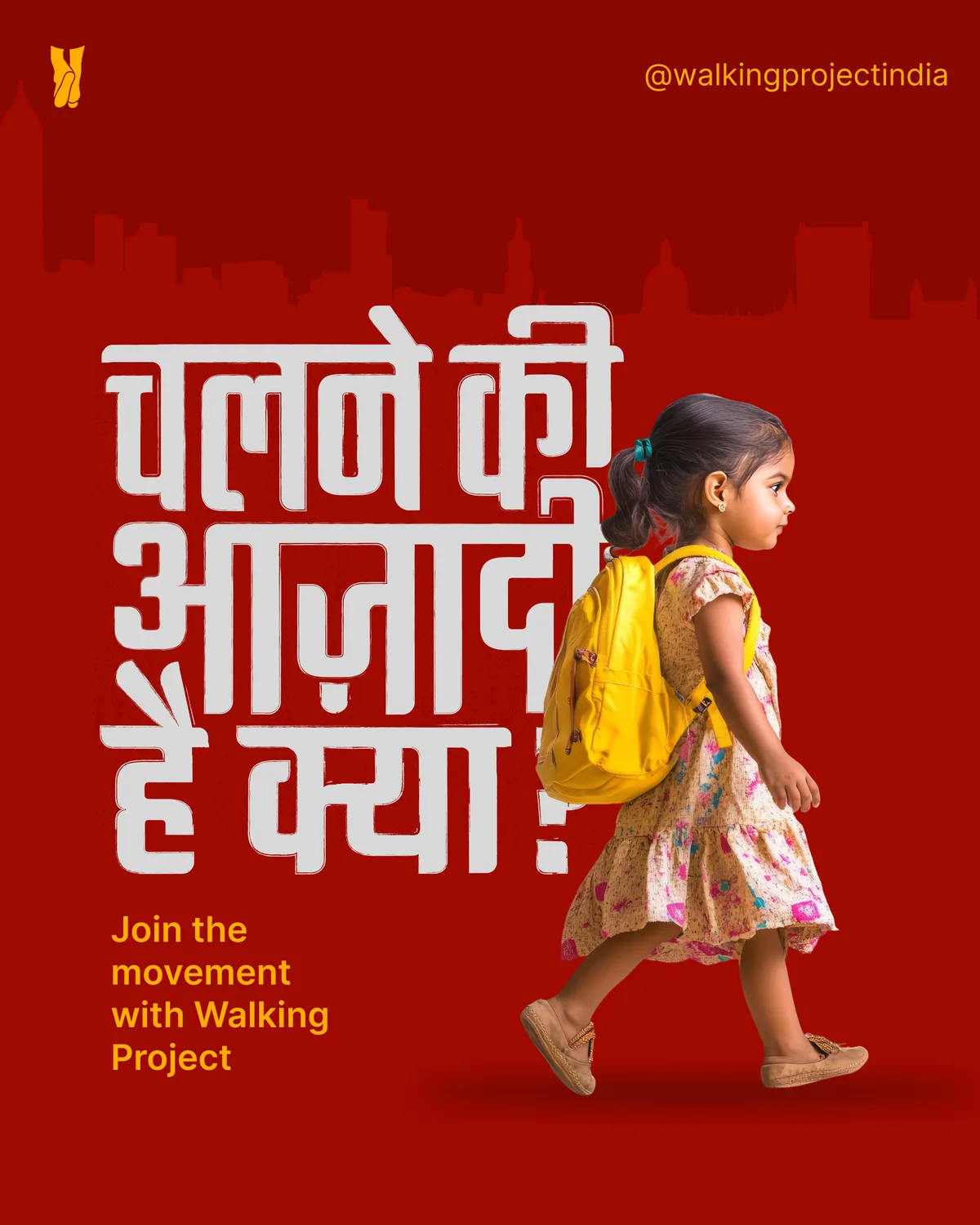
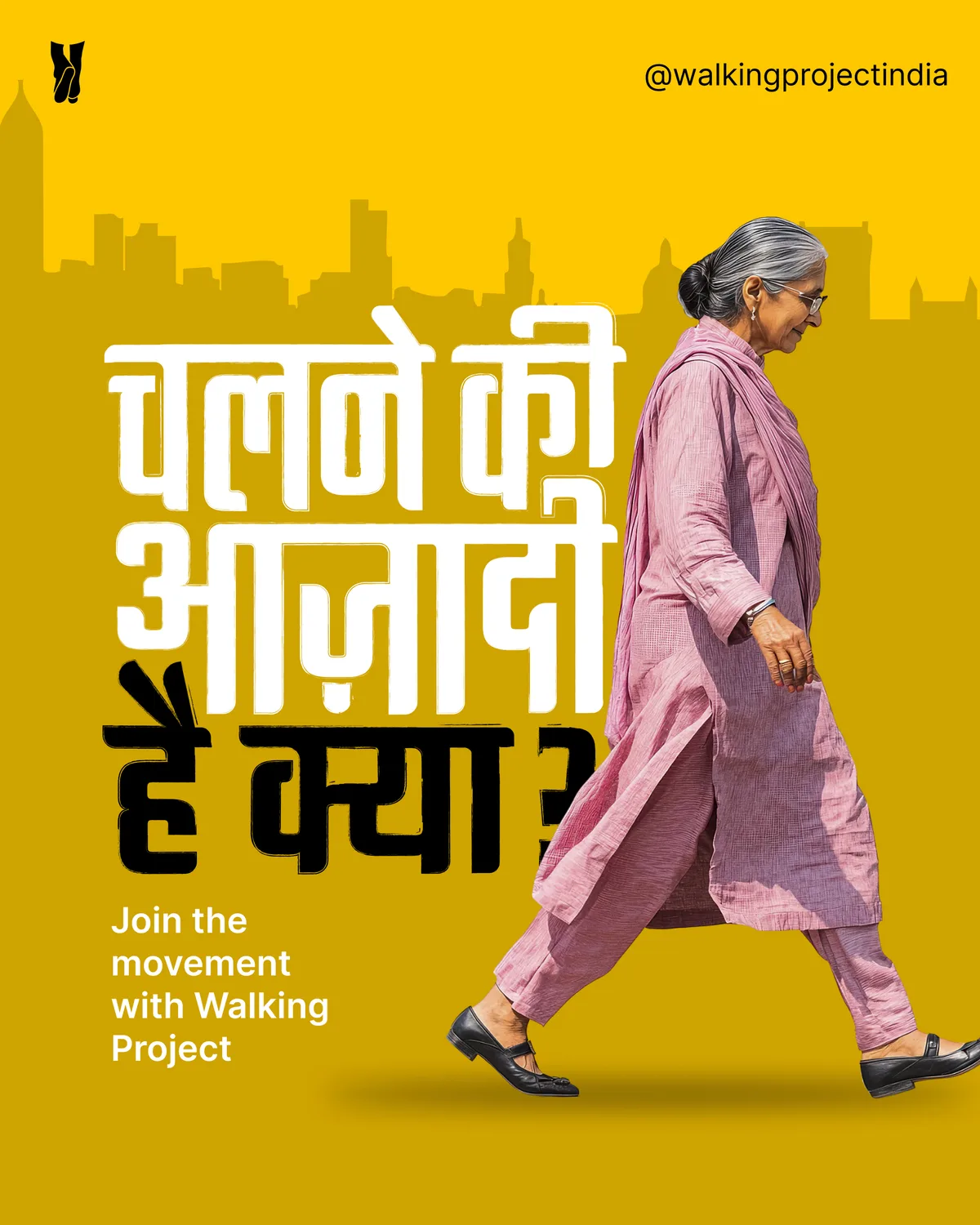
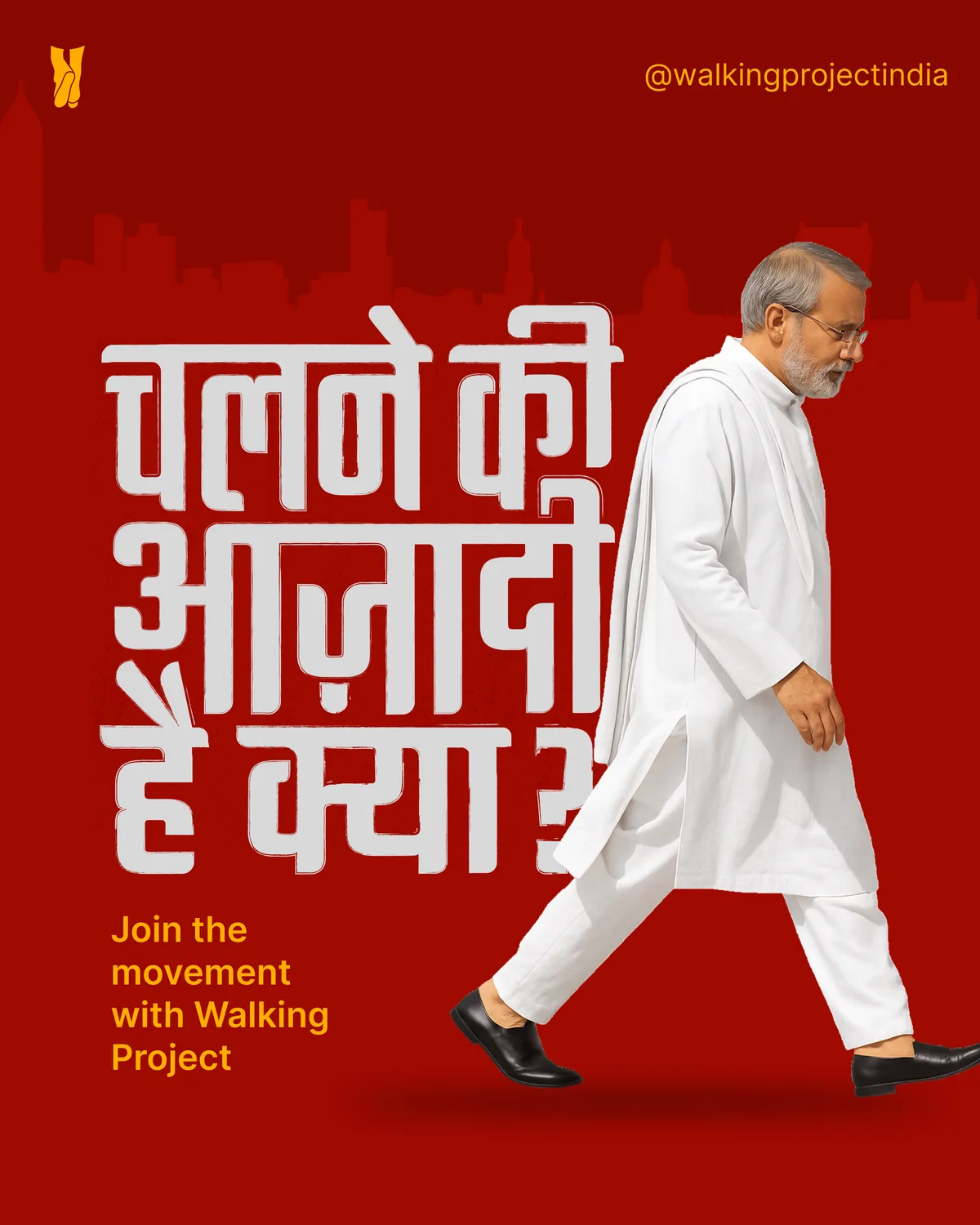
Social Media CommunicationThe anchor campaign asks one question: chalne ki azadi hai kya? Is there freedom to walk? Borrowing the charge of the word azadi, the series puts the people who actually walk Mumbai at its centre: an elderly woman on her evening round, a schoolgirl with her backpack, a senior citizen on his morning walk, each striding across a silhouette of the city's skyline.
Hand-drawn Devanagari display type does the shouting, the walkers do the convincing, and every poster closes with the same invitation: join the movement with Walking Project.
Numbers That Walk
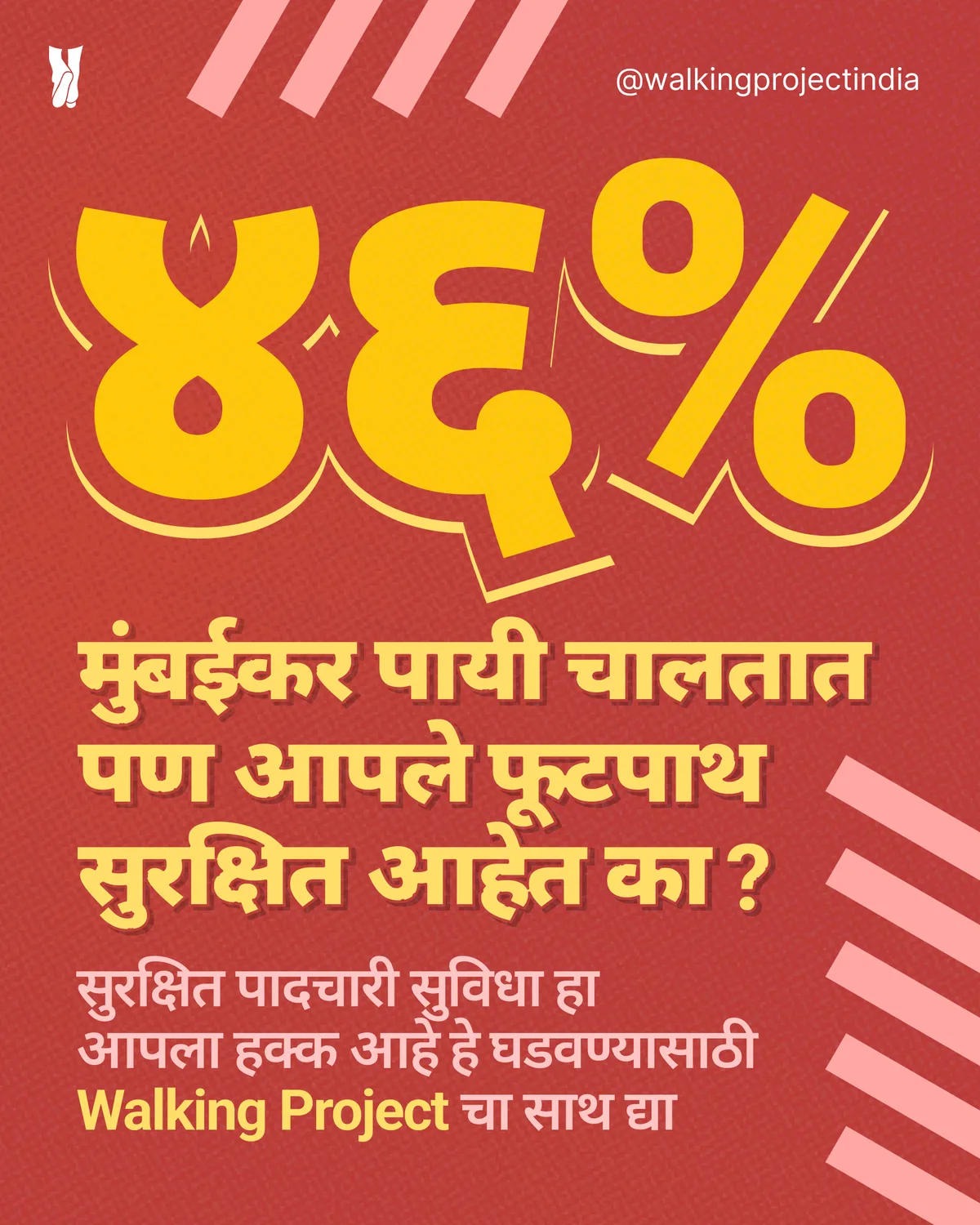
Data StorytellingWalking Project's strongest asset is its evidence, so the feed treats statistics as heroes. 46% of Mumbaikars commute on foot. That number is set in oversized Devanagari numerals and asked back to the city in Marathi: Mumbaikars walk, but are our footpaths safe? The same layout ships in daylight blue and alarm red, so the fact returns to the feed without repeating itself.
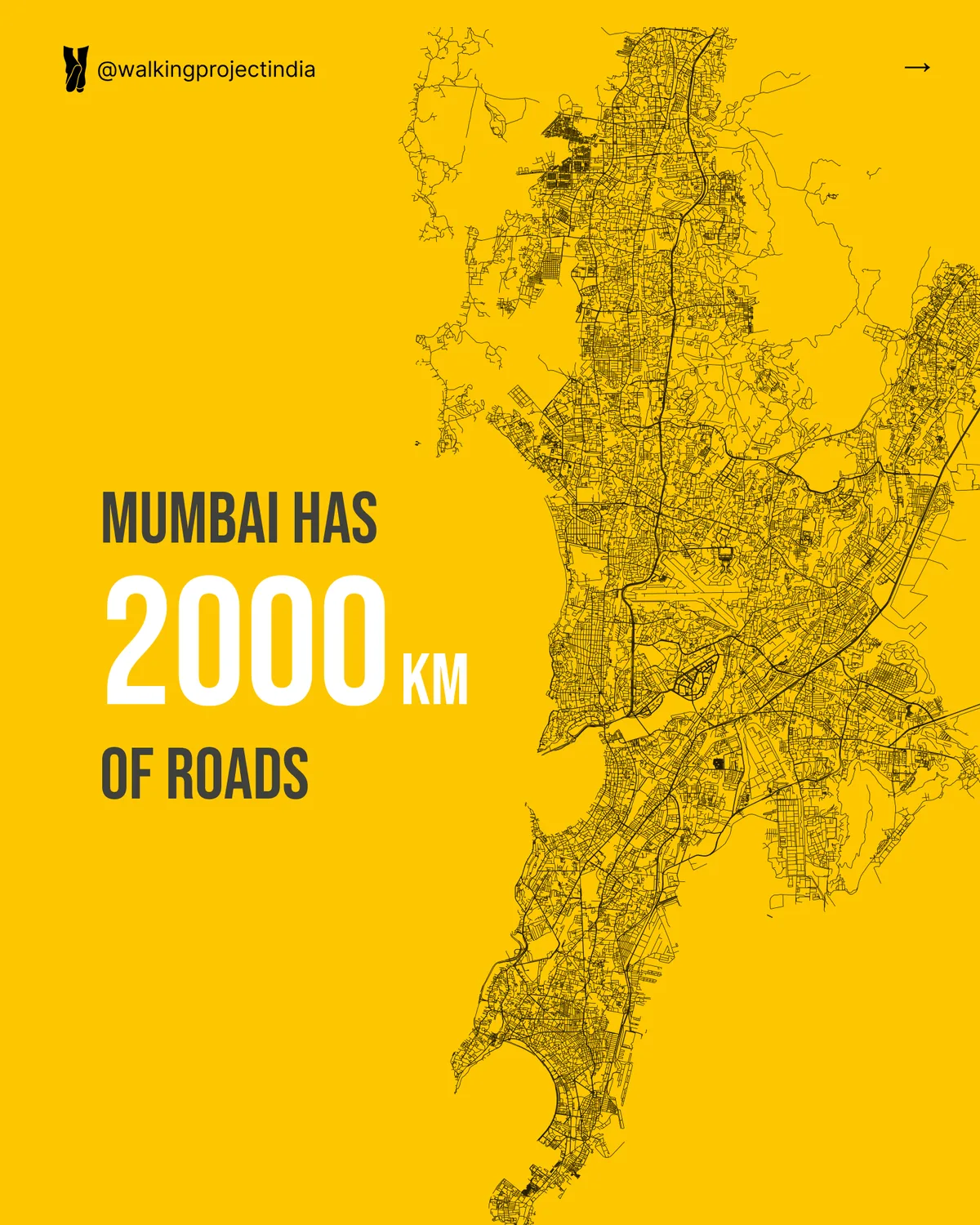
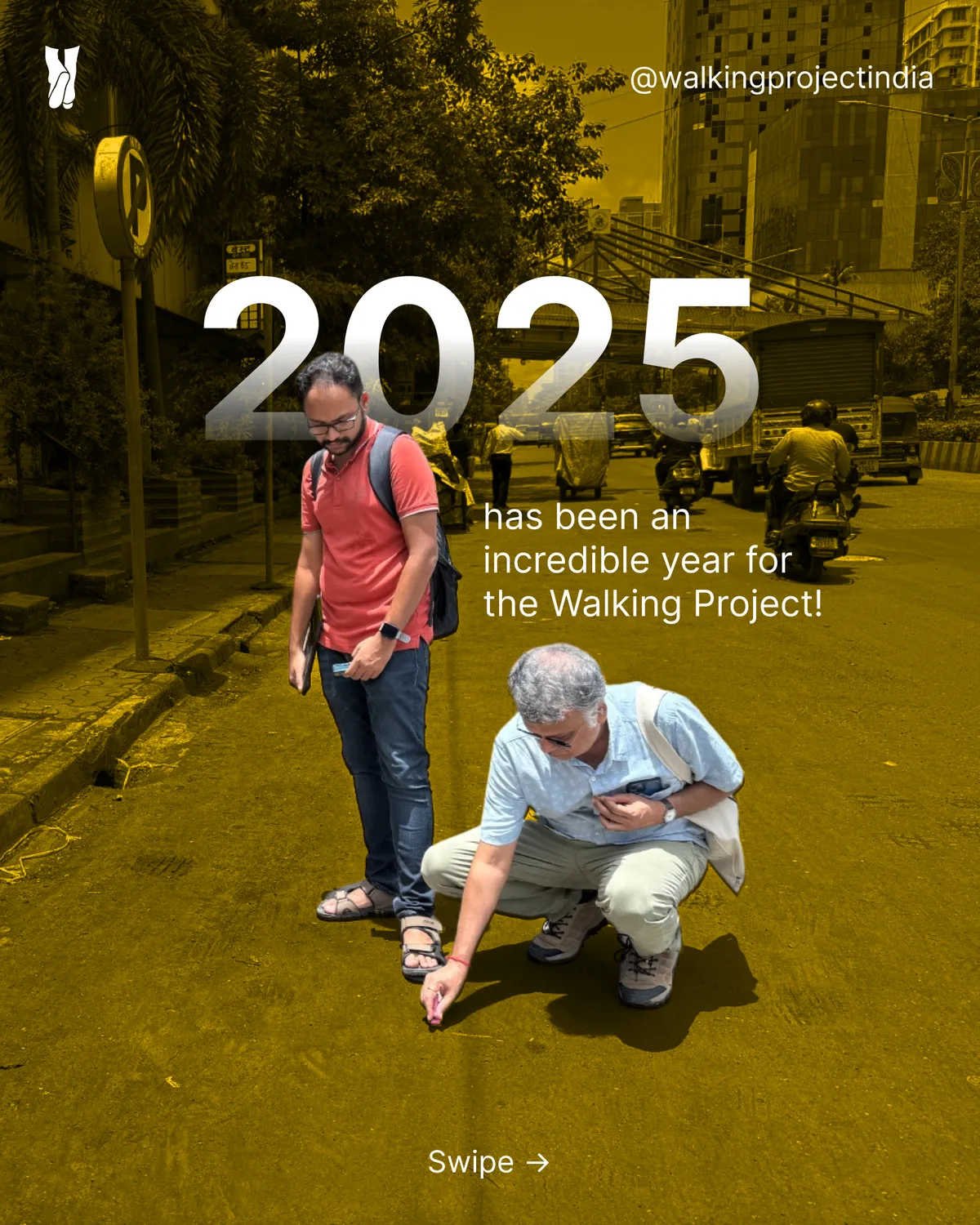
A city-scale map drawn from open data makes the other number real: 2,000 kilometres of roads, and every line of it walked. Year-end recaps carry the movement's wins back to the community that made them happen, over duotone photographs of volunteers auditing the streets.
Two Colours, One Voice
Visual LanguageThe identity runs on exactly two colours. The marigold of the mark: taxi-top yellow, traffic paint, high-visibility optimism. And the charcoal that carries the walking feet, the type and the city silhouette. Individual campaigns can change their backdrop, but the pair stays fixed, so every post reads as Walking Project before you read a single word.
Bold hand-lettered Devanagari headlines give the campaigns a protest-poster urgency, while clean grotesque body type keeps the data credible.
A Website That Holds the Argument
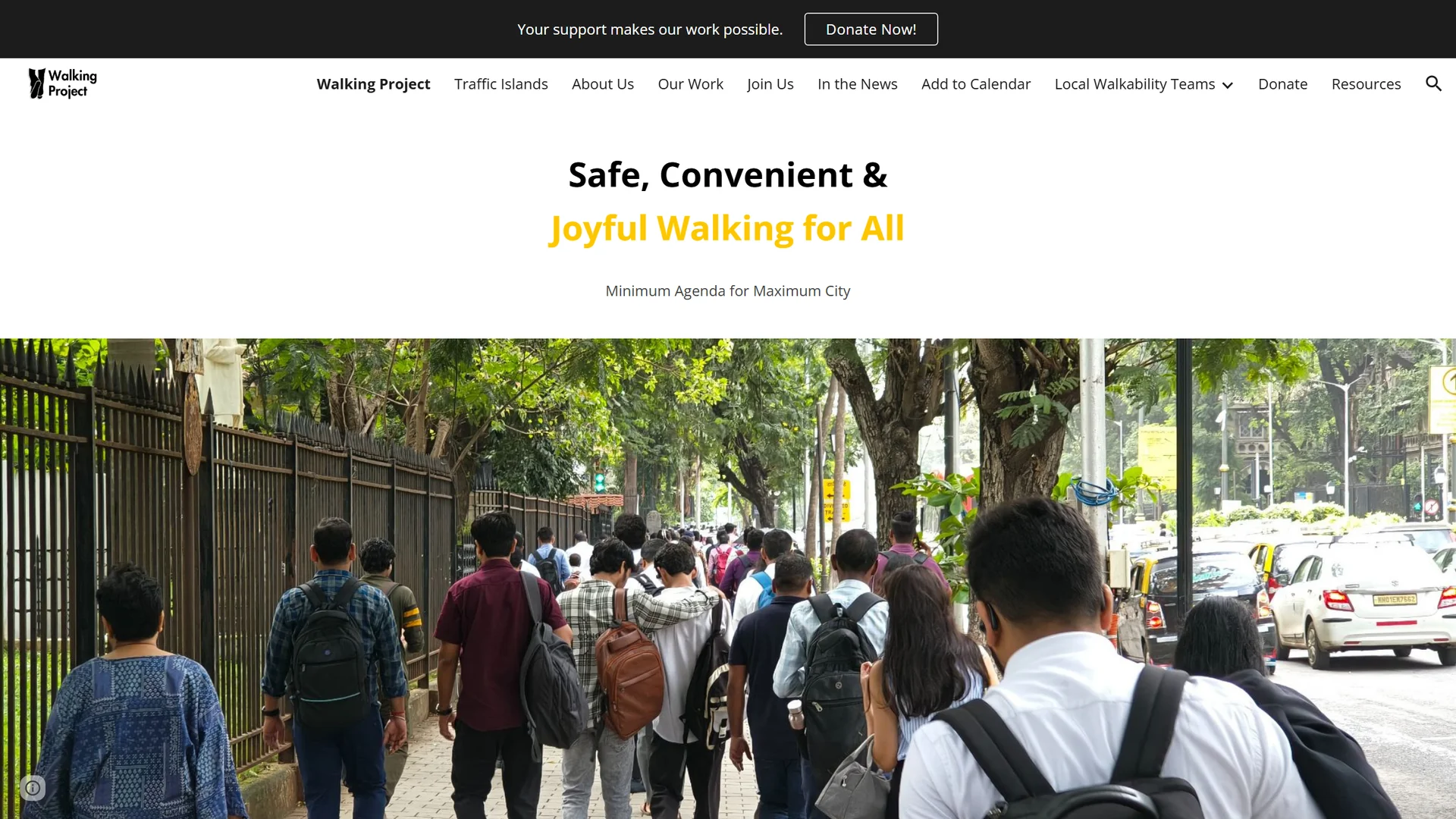
Website RedesignSocial media wins the first three seconds. The website has to win the next three minutes. We rebuilt walkingproject.org around the movement's tagline, safe, convenient and joyful walking for all, leading with the one photograph that says everything: a Mumbai footpath at rush hour, full of people, beside a road full of cars.
The redesign sorts a decade of work (footpath audits, traffic island fixes, local walkability teams, press coverage) into a navigation a first-time visitor can walk through. Joining the movement and supporting it are always one click away.
Client Impact & Outcomes
Measuring SuccessProject credits
Client
Walking Project
Studio 1947
Time and place
Mumbai, Maharashtra, 2026
Viewed 0 times
More work
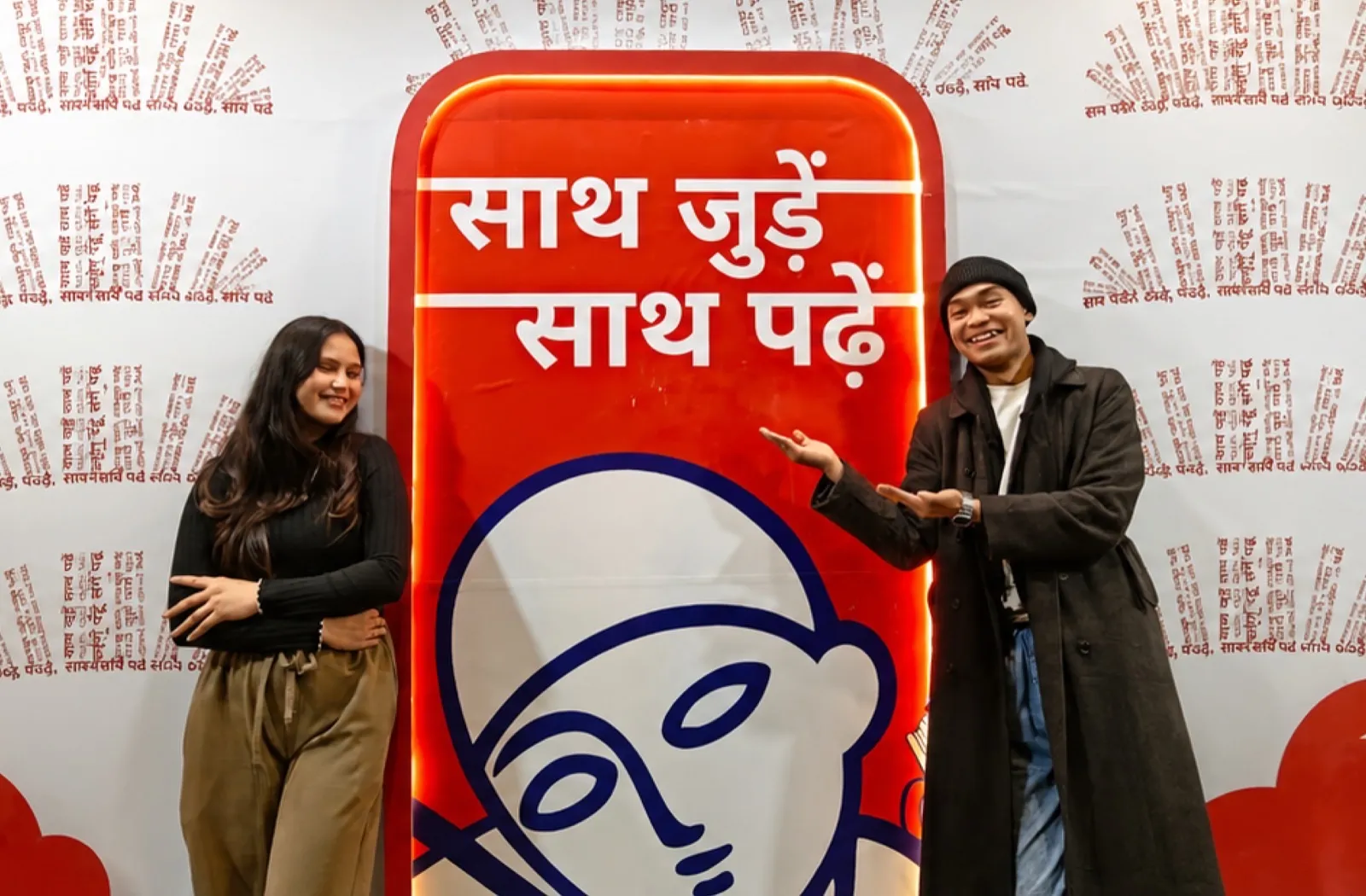
Rajkamal Prakashan

Fermy Lab
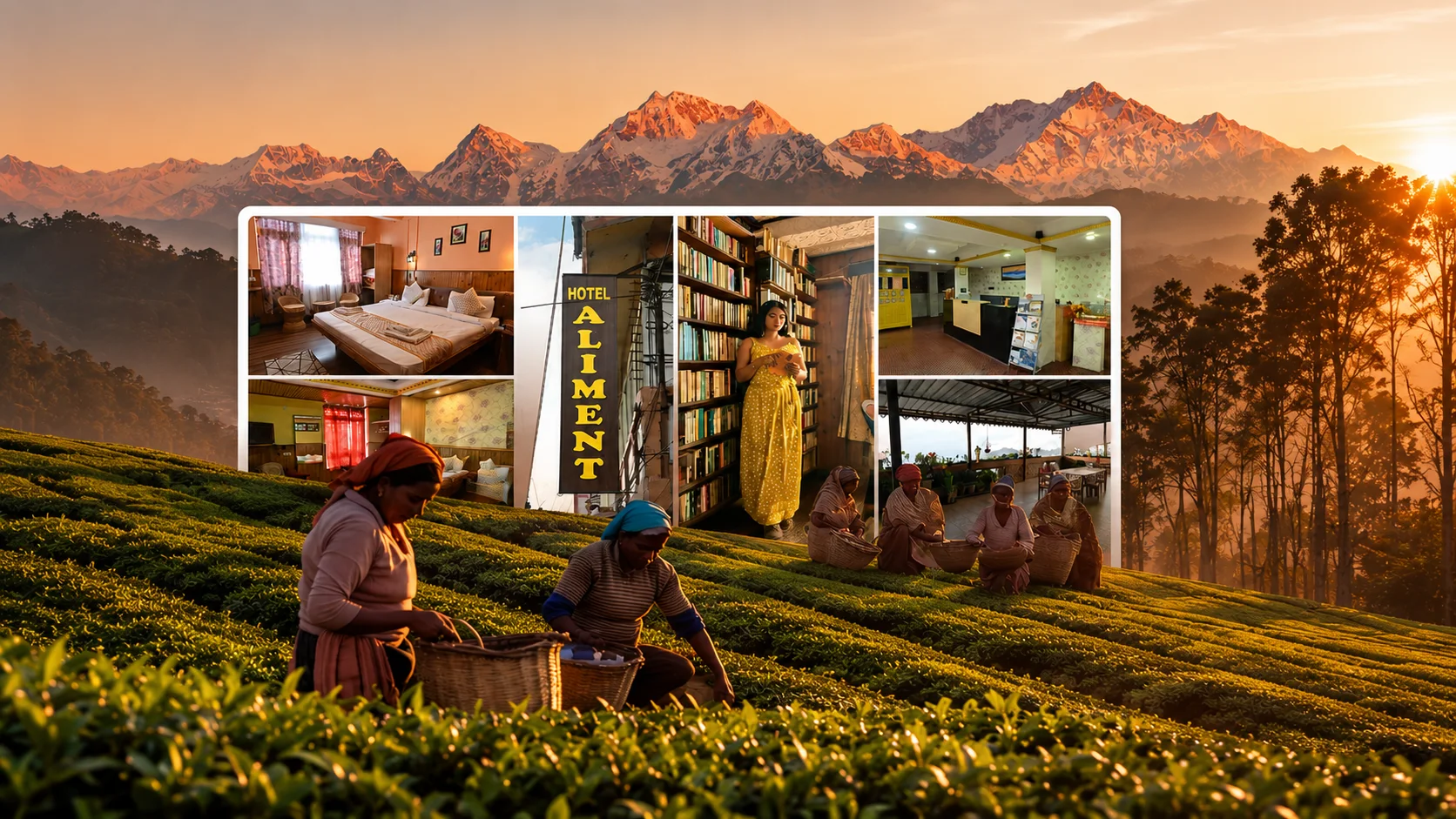
Nest Homes
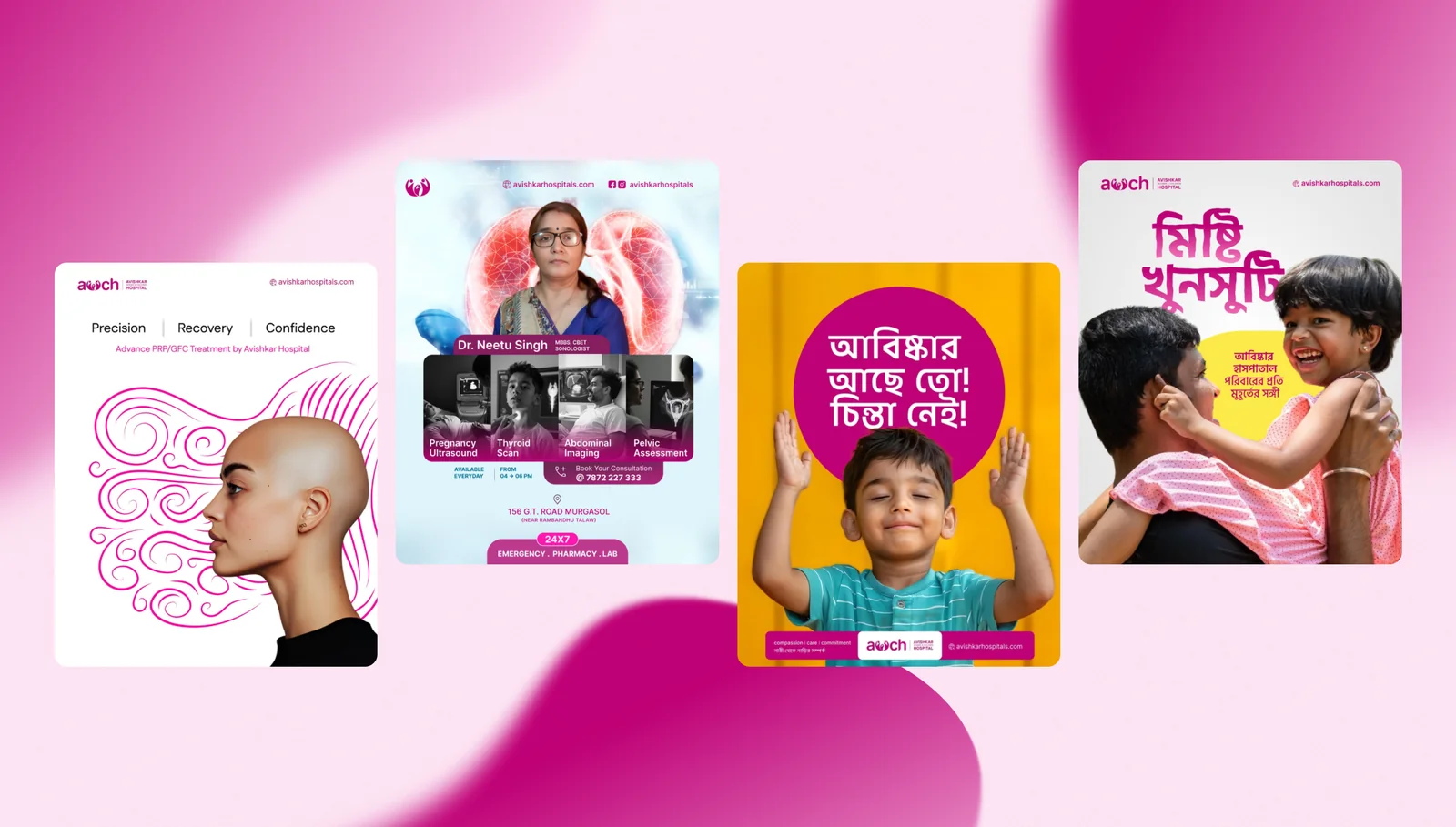
Avishkar Hospital
AIcrowd
Local Futures
Friedrich Ebert Foundation
Frame Bengal
Jan Sahas
FIH Website Redesign

Remodel UN
Mirik College

Elegant Sip
Prokritir Group
Bhagyam Arts & Aesthetic
Village Ways
Radha Madhav Medical Hall

Healix
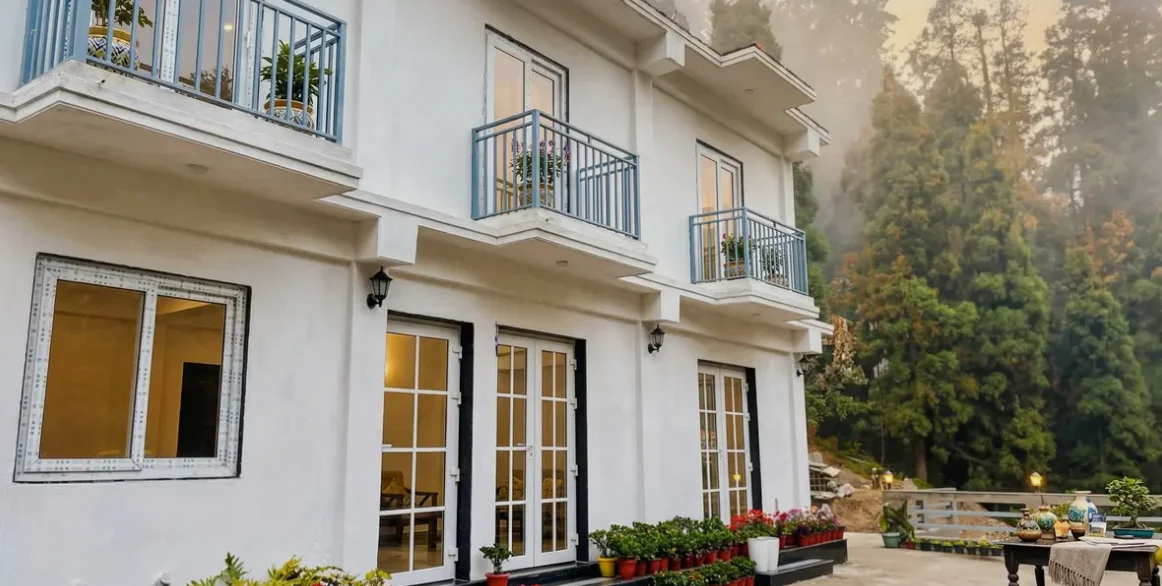
Kulam Homestay

Sikkim Himal Institute
Bhagirath Homestay