Data & Dashboards
Custom Software vs Off-the-Shelf Tools: When Should a Business Build Its Own System?
Every growing organisation eventually asks the same question about some part of its operations: should we buy something ready-made, or build our own?
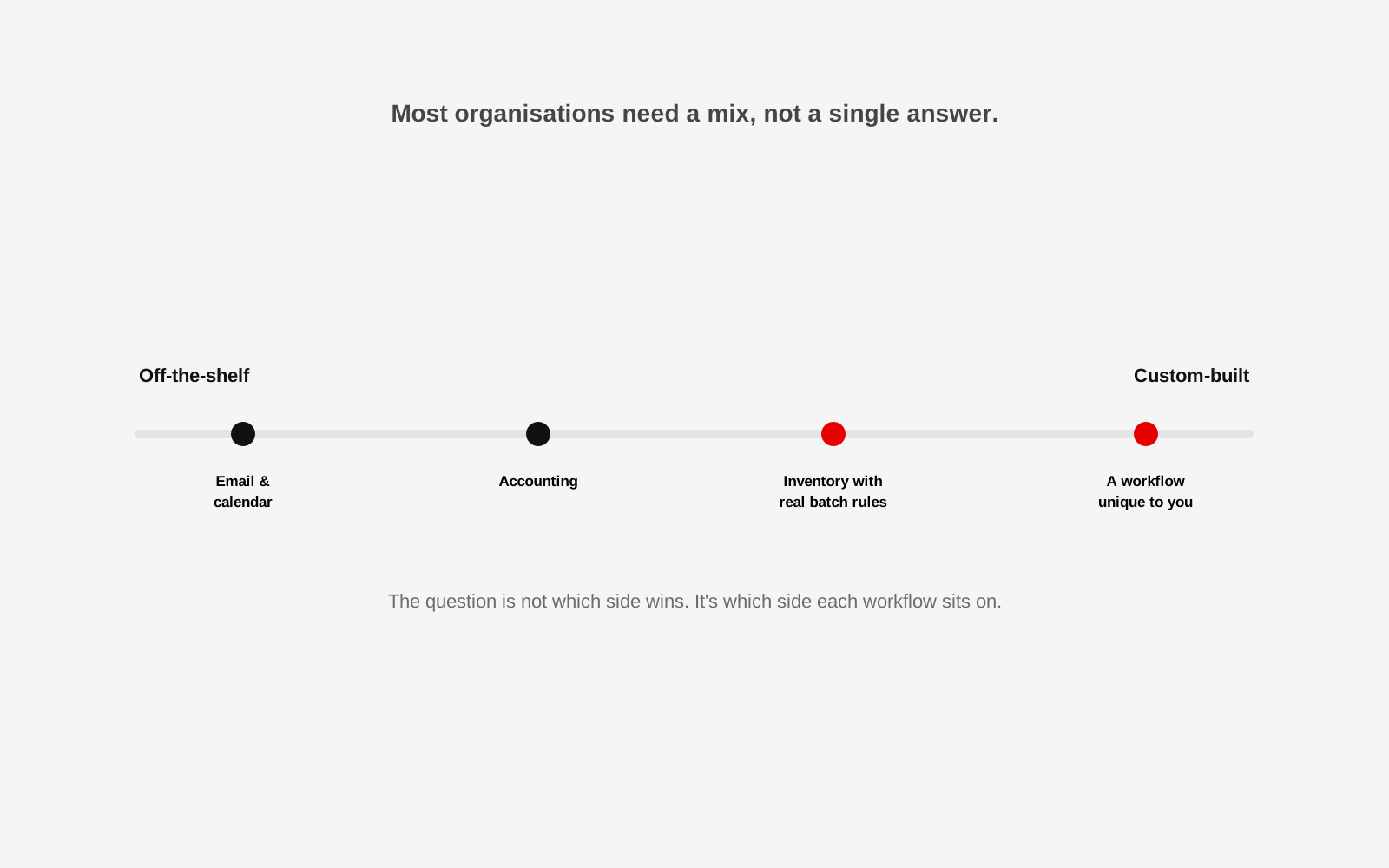
There is no universal right answer. Most organisations end up with a mix, off-the-shelf tools for the parts of the business that work like everyone else's, and something custom-built for the parts that genuinely do not.
Off-the-shelf wins when the workflow is standard
Email, accounting, basic scheduling, generic form-building, these problems have been solved thousands of times, and mature tools already handle the edge cases a new build would take years to discover on its own. If your workflow looks like most other organisations' version of the same task, buying is usually faster, cheaper and safer than building.
Custom wins when the workflow is genuinely yours
Some processes are specific enough that no off-the-shelf product fits without heavy compromise: a batch-and-expiry inventory system built around how a particular pharmacy actually operates, an admissions workflow shaped by one institution's real structure, a monitoring system tied to indicators nobody else defines quite the same way. Forcing a generic tool onto a genuinely unique process usually means the team ends up working around the software instead of through it.
Watch for the workaround tax
A common failure mode is choosing an off-the-shelf tool that almost fits, then building an increasingly elaborate set of spreadsheets, manual steps and side-processes to cover the gap. Add up the hours spent on those workarounds honestly. Sometimes that total is smaller than a custom build. Sometimes it has quietly become larger.
Custom software is not just the build, it is the maintenance
An off-the-shelf tool spreads its maintenance cost across every customer using it. A custom system puts that cost entirely on you: security updates, bug fixes, the person who understands how it works leaving the organisation. Custom software is a real, ongoing responsibility, not a one-time purchase, and that should be weighed honestly against the workaround tax on the other side.
Data ownership is part of the decision
Ask what happens to your data if you ever want to leave a platform. Can you export it in a usable form? Is it held in a proprietary structure that locks you in? A tool that is otherwise a good fit but makes your own data hard to extract is taking on a real long-term risk on your behalf.
A hybrid approach is often the honest answer
Studio 1947's own product line reflects this mix directly: some organisations are well served by a ready-made product like Pharma ERP or the Doptor NGO Manager, built once and refined across many users, while others needed something built specifically around them, as with the Radha Madhav pharmacy dashboard. The right mix usually keeps standard operations on proven tools and reserves custom work for what genuinely sets the organisation apart.
Pilot before you commit either way
A short pilot, whether trialling an off-the-shelf tool on a real workflow or prototyping a small piece of a custom build, reveals problems that a sales demo or a specification document never will. Commit fully only after the pilot has actually been tried against real data and real users.
Revisit the decision as the organisation grows
The right answer for a ten-person team is not always right at fifty. A tool that once fit can start to strain, and a process once too small to justify custom software can grow into exactly that. Treat this as a decision to revisit periodically, not a choice made once and forgotten.
The question is not which side wins
Studio 1947 works across product engineering and custom development to help organisations build what genuinely needs building, and steer clear of the rest. See our Data, Design & Tech work, or talk to us about build versus buy.