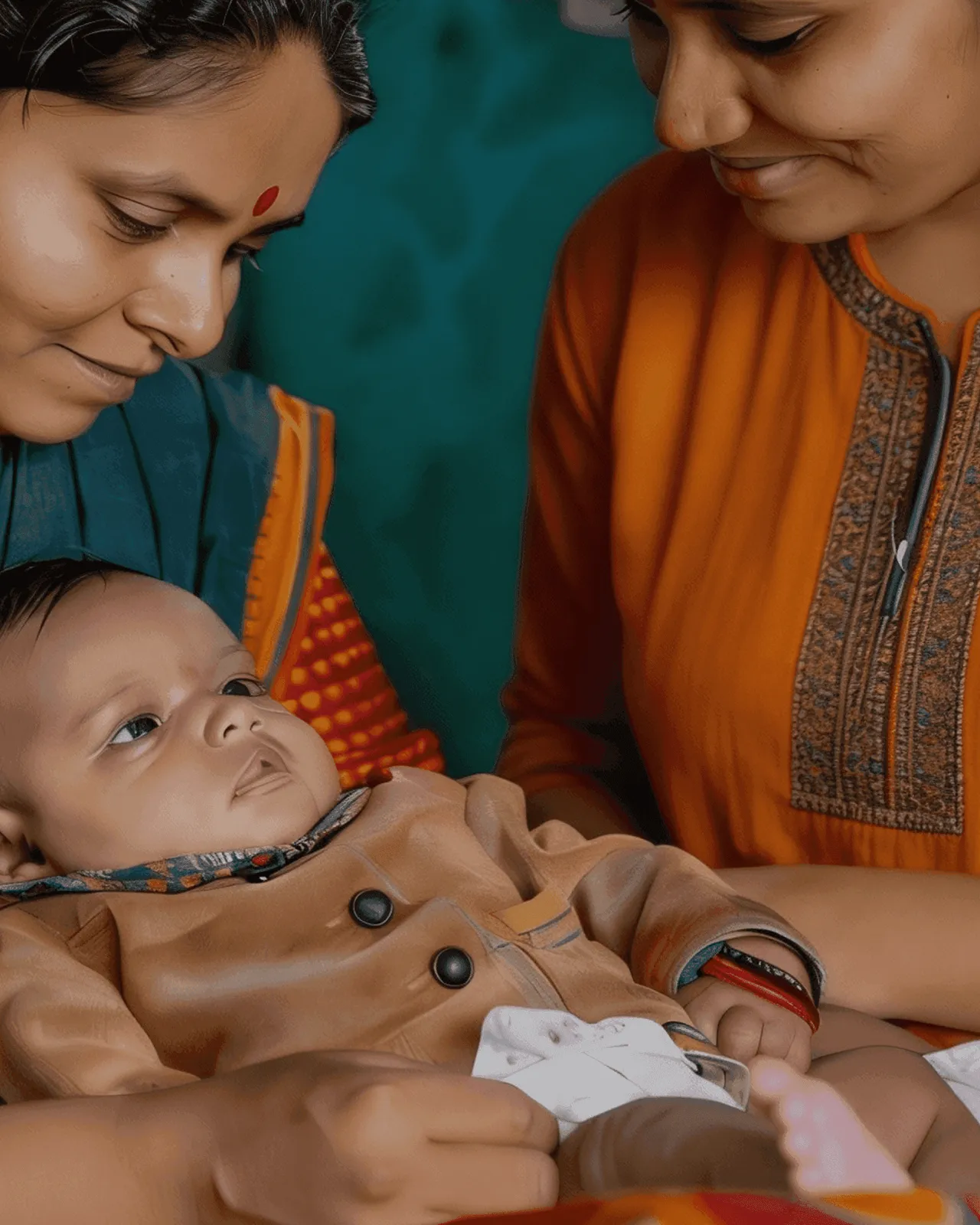
“We did not have machines, but we had hands that knew. We watched the mother, not the monitor. We sang to her, held her, stayed with her, not for money, but because birth is not a job, it is a responsibility.”
: Rokeya Bibi, retired dai from Murshidabad district
Before hospitals, ultrasounds and epidurals, childbirth across the Indian subcontinent happened at home. Women, rituals and the knowledge of traditional midwives surrounded it. These midwives, known as dais, often had no formal schooling. Yet their practised hands brought generations of young Indians into the world. In places like West Bengal, their role went far beyond the birth itself. They helped shape the child’s cultural and moral upbringing.
Sadly, as biomedical science raced ahead, this local knowledge was slowly pushed aside, as happens with most indigenous practices. But today, as we wake up again to the value of well-rounded, culturally rooted care, these stories of midwives and their skill have a lot to teach us. Not only about childbirth, but about community, care and the underrated genius of women’s intuition.
Across India, births were handled by experienced midwives who learnt their craft through apprenticeship, not training. These dais helped at every stage: spotting the early signs of labour, positioning the mother for comfort, cutting and tying the cord with a sterilised sickle, and guiding postpartum care for mother and baby. Most were from marginalised caste backgrounds, especially in rural areas. This put them in a strange double position. They faced social stigma, yet they were essential. No baby could enter the world without them.
West Bengal: The Dai as Ritual Healer and Skilled Professional
In West Bengal, traditional midwifery had its own flavour. Here the dais were not just birth attendants but also ritual guardians, especially in Birbhum, Nadia and the 24 Parganas. They would call on deities, above all Shashthi Maa, through songs and mantras to help the birth go smoothly. They also guided the use of shital pati, cow dung-coated birthing rooms, food restrictions and body-wrapping. These served both hygiene and symbolic purity.
In Bengal, childbirth was more than a medical event. It was a passage full of social, cosmic and emotional meaning. Women saw motherhood and each of its steps as rites of transformation, a shared experience that belonged only to women.
How ‘Modernisation’ Took the System Apart
As colonial and post-colonial views took hold, people grew suspicious of midwifery. The British pushed “clean” and “scientific” childbirth, which slowly displaced the dais. After independence, programmes like the Janani Suraksha Yojana (JSY) pushed for hospital delivery and rewarded it over home births. This wore away the role of dais even more.
This shift had a cost. Hospital delivery has clearly improved survival in emergencies. But losing culturally rooted care has left many women, especially from rural and tribal communities, feeling alone and unsupported in childbirth. A hospital’s clinical setting, with its language barriers, unfamiliar rules and no community, can be deeply disorienting for women used to being surrounded by trusted women from their village.
Reclaiming the Legacy: Recording It and Bringing It Back
Thankfully, a growing movement is recording and honouring the knowledge of dais before it is lost for good. Researchers, NGOs and cultural organisations are recording the practices, songs and wisdom of retired dais. Institutions like Srishti Manipal Institute and Viswa-Bharati have started projects to document and preserve the memories and skills of retired dais before they are lost forever.
In rediscovering the old genius of dais, we have also learnt more about how midwifery worked. Dais were often emotional anchors for first-time mothers. Birth was a community event, surrounded by women, songs and comfort. And most importantly, healing did not end when the baby arrived. Postpartum care mattered just as much.
On a brighter note, India’s maternal mortality has been falling steadily, thanks to access to formal healthcare. But numbers do not tell the whole story. Culturally sensitive care is still missing, especially for marginalised communities. That leaves a big gap in trust and follow-through that we need to close. One way is to bring traditional knowledge into modern systems. Train midwives in both obstetrics and traditional care. Make safe home births a valid, supported option. Give postpartum care the importance it deserves. Dais can then carry and teach their dying craft, so that maternal care is not only safe but deeply rooted in cultural understanding.
The Wisdom We Left Behind
Traditional midwifery in India has many stories to tell. In West Bengal, for example, these stories go far beyond childbirth. They are remnants of knowledge we overlook when we measure care through technology alone. They are records of women’s wisdom, caste knowledge and rural knowledge. Of little importance on paper, of great relevance in the workings of life.
As India pushes ahead in healthcare innovation, revisiting these indigenous knowledge systems does not mean going backward. It means accepting all that was wise, human and healing, improving it with the modern knowledge we have now, and letting that improved system guide us on the path ahead.