When you hear about Nakshi Kantha, you might think it’s just an old quilt. But for many of us from Bengal, it means much more. These are not just stitched blankets. They hold stories. Real ones. About family, life, hopes and memories.
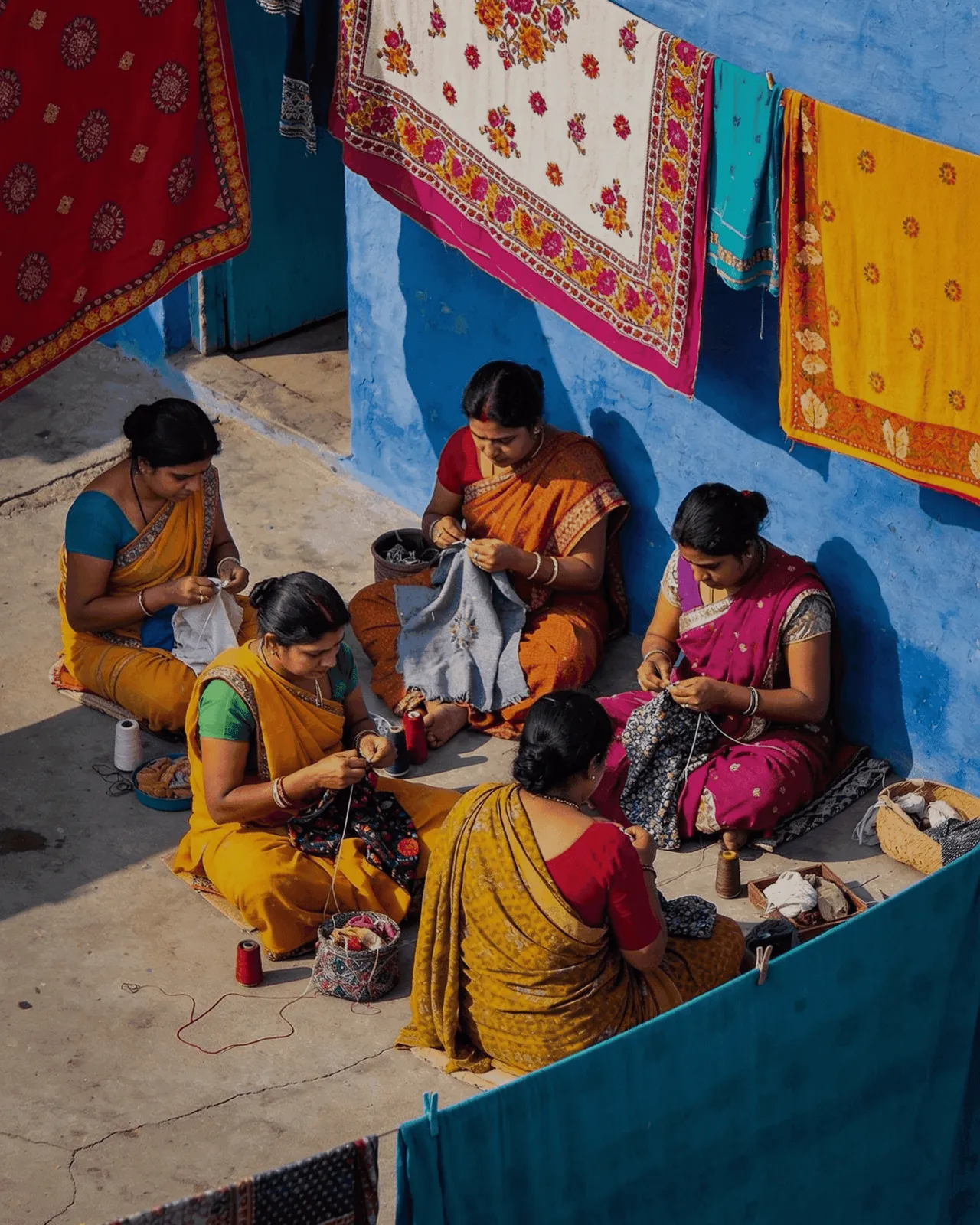
Nakshi Kantha is part of our heritage, especially in Bangladesh and West Bengal. Women would take old clothes, usually worn-out saris, layer them and sew them together with a running stitch. That simple technique became something special. Over time it grew into a style of embroidered storytelling, passed down for generations.
What Makes Nakshi Kantha Special?
The name says a lot. “Nakshi” means design. “Kantha” means quilt. It’s not about fancy materials. It’s about making something meaningful from what you have. People reused old clothes from their homes, and even the threads from those clothes, to make something beautiful. The thread was often pulled from old saris too. Every piece told a story. Some were about daily village life. Others were about dreams, memories or big events from history.
The quilts often show women working in fields, fish in ponds, peacocks, trees, birds or religious icons. These plant and animal motifs aren’t random or just for show. They usually carry meaning: good luck, fertility, blessings, spiritual beliefs, love or memories. Some even show political change, past struggles or personal loss.
Why Was It So Important?
For many women, Nakshi Kantha was a way to say what they couldn’t say out loud. Most of them didn’t keep diaries. They stitched their thoughts instead. Making these quilts was also a way to support and bond with other women in the community.
They made them for weddings, new babies, or to keep a loved one warm. Often they passed these pieces down to children and grandchildren. They weren’t just items. They were memories, a piece of someone’s life. In some families, a kantha was the only thing a woman could call her own. She made it by hand, and every stitch showed her care, time and patience.
How It’s Made
Let’s keep it simple. You take a few old saris, stack them on top of each other, and sew all over them with tiny running stitches. The designs are usually drawn by hand first, in chalk or pencil. Then comes the stitching: slow, careful and full of meaning.
It takes time. Weeks, sometimes months, depending on the size and detail. That’s why each piece feels so personal. It reflects patience, love and a quiet way of telling stories. This kind of handmade textile work doesn’t rush. The stitches may look simple, but the patterns and the stories behind them are not. The work often starts at the centre and moves outward, like a ripple. This helps keep the cloth and the design balanced.
What Happened to It?
So why do people call Nakshi Kantha embroidery a “lost” art? A few things changed. First, machine-made quilts and printed textiles took over the market. They’re faster and cheaper. That made many people forget the value of slow, handmade pieces.
Then there’s the change in how people live. Fewer women in villages are sitting down to sew these. Many young people are moving to cities and chasing new careers. They no longer have the time or space to learn this craft. Even those who do make Nakshi Kantha today may struggle to earn enough from it.
Some artisans worry that their work is copied or used without credit to the original makers. Others feel mass production strips away the meaning, love and care behind each piece. These worries are real. Women who once made kantha for joy or love now make it for money, often because they have to. And that changes things.
Is There Hope?
Yes. There are signs of hope. People are starting to notice again. Some women are trying new ideas, using symbolic designs that speak to today’s problems, like climate change, migration or personal stories of loss. They still use recycled fabrics, but the themes are modern.
In some places, women are teaching each other again. They’re forming groups where they can stitch together, share stories and sell their work. During a recent Durga Puja in Kolkata, a huge 100-foot kantha panel showed off their skills and reminded people how valuable this art still is. There’s also growing interest in using these quilts in other ways, as home decor, fashion or framed wall art. That helps keep the craft alive and gives more women the chance to earn a living from it.
What Do These Quilts Really Show Us?
Each piece of Bengal embroidery shows us more than skill or talent. It shows us care. It tells us how someone lived, what they felt and what they wanted to hold on to. Whether it’s a spiral for the cycle of life or a fish for good luck, these symbolic designs speak without words.
Some quilts show a quiet day in the village: trees, ponds, animals and family. Others share deep feelings. A mother’s love. A daughter’s loss. A woman’s wish for a better future. These aren’t just decorations. They’re messages from real lives. If you pick up a real Nakshi Kantha, you’re not just holding a quilt. You’re holding someone’s voice.
Final Thoughts
We don’t need to look far to see the value of old crafts. In the rush for faster and cheaper, we often forget the beauty of slow, thoughtful work. Nakshi Kantha reminds us of that. It reminds us to stop and listen to the stories stitched into fabric. To respect the hands that made them. And to pass those stories on. Let’s not let this art fade away. Let’s help keep these stitches, and the stories inside them, alive.