Research & Evidence
Social Listening: What Organisations Can Learn Before Launching a Product, Campaign or Rebrand
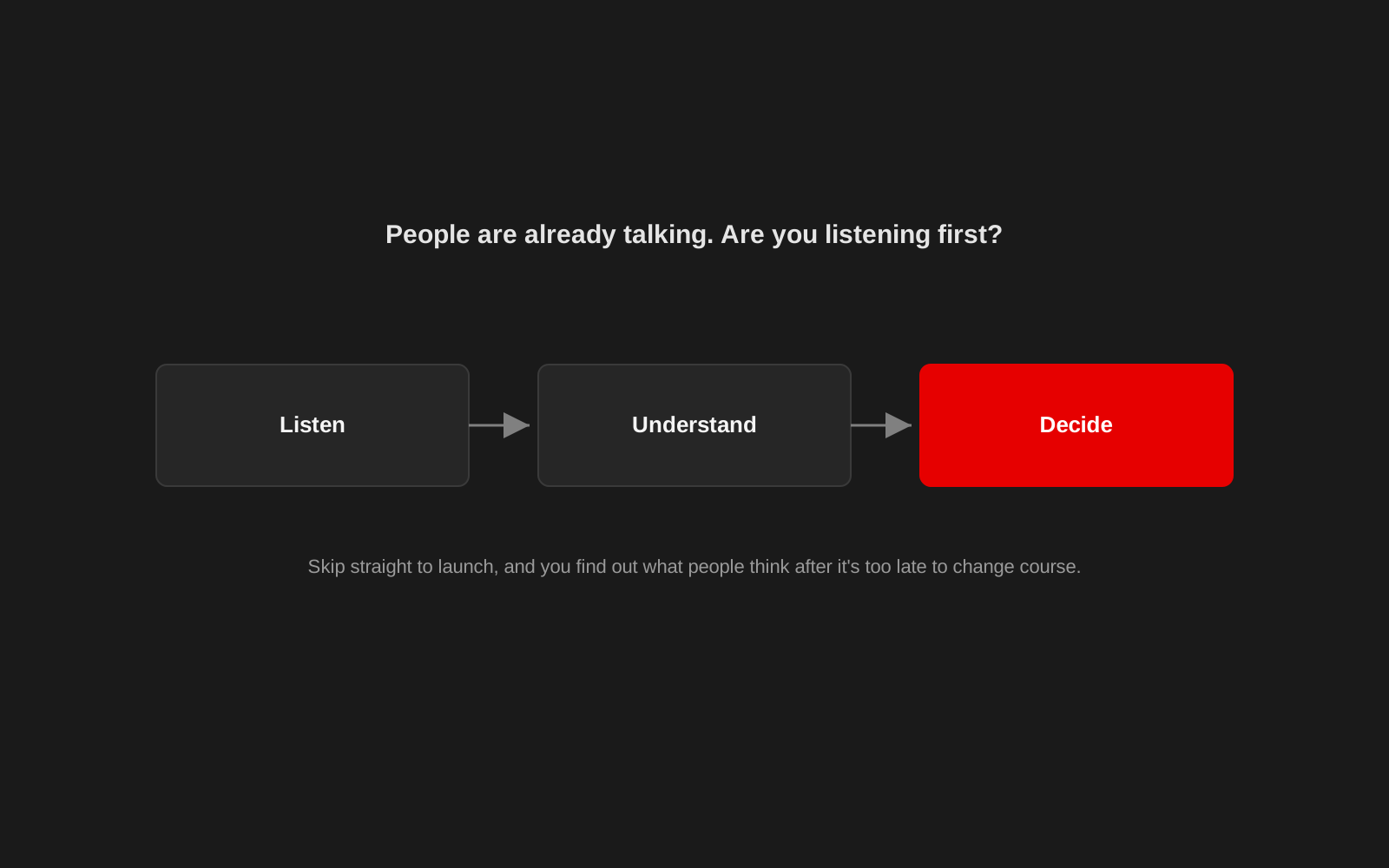
Before a product ships, a campaign goes live or a rebrand is announced, people have usually already been talking, in comment sections, reviews, community groups and everyday conversation. Most organisations only start paying attention after the launch, when the conversation is about them instead of before it, when it could still change what they do.
Social listening, in its plain sense, simply means paying structured attention to that conversation before you act, rather than assuming you already know what people think.
It is a habit, not a piece of software
Listening does not require an expensive monitoring platform to be useful. It can be as simple as a team member regularly reading reviews, comments and community discussions relevant to the topic, and keeping honest notes on what comes up repeatedly. The tooling can scale later. The habit of actually looking is what matters first.
Listen for patterns, not for compliments
It is easy to read comments looking for validation and easy to dismiss criticism as one loud person. Neither is useful. The goal is to notice what comes up again and again, in different words, from different people, because a pattern is far more likely to reflect something real than any single comment.
Before a launch, listen for the questions people already ask
If you are planning a new product, a campaign or a rebrand, look at what people already ask about the problem you are addressing. Their existing language, the words they use, the objections they raise unprompted, often reveals more than a brief written from inside the organisation. It can also surface expectations you had not planned to address.
Before a rebrand, listen for what the current identity actually means to people
An internal team can be tired of a name, a logo or a tone long before the audience is. Listening first can reveal whether a rebrand is solving an internal fatigue problem or an external perception problem, and those call for different decisions.
Separate the loud from the representative
Social platforms amplify strong opinions more than typical ones. A handful of very vocal comments are not the same as evidence of a widely held view. Where the stakes are high, structured research, a survey, interviews, a proper sample, should confirm what listening alone only suggests.
Write down what you heard before you decide what to do about it
It is tempting to jump straight from a comment to a reaction. A short, honest summary of what was actually said, kept separate from what the team thinks it means, makes for a better decision later and a record worth checking back against.
Respond like a person, not a policy
If listening surfaces a real concern worth addressing publicly, respond with the same care you would use in person: acknowledge what was actually said, avoid defensive scripts, and be honest about what will and will not change. People notice the difference between a genuine response and a template.
Close the loop internally too
Listening is wasted if it stays with one person's notes. Whoever owns the product, campaign or brand decision should actually see what was heard, in a form they will read, before the decision is finalised, not after.
Listen first, launch with fewer surprises
Studio 1947 works across research and communication to help organisations understand an audience before they act, not only measure the reaction afterwards. See our Research & Survey and Communication & Campaign work, or talk to us before your next launch.