Education
Digital Skills Training for Teams: How to Build Capability Without Creating Tool Dependency
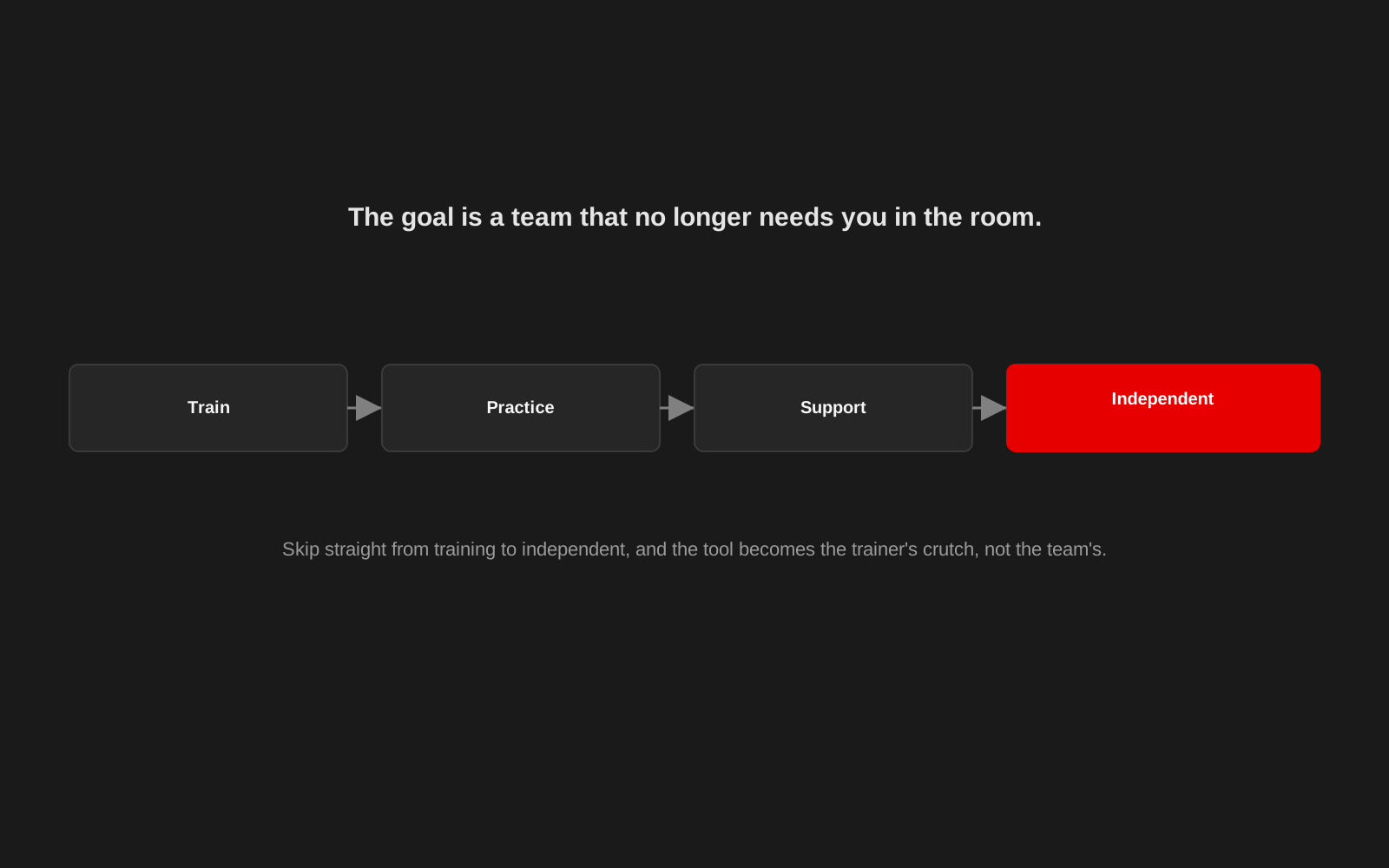
A training session can go well and still fail at its actual job. Everyone nods along, the room feels productive, and six months later the team is back to doing things the old way, or worse, calling the trainer every time something unfamiliar comes up.
The real goal of digital skills training is not the session itself. It is a team that can keep working competently once the trainer is no longer in the room.
Training and capability are not the same thing
A workshop transfers information. Capability is the ability to apply that information to a new situation nobody explicitly covered. A team can sit through excellent training and still lack capability if every session only ever demonstrates fixed scenarios rather than building the underlying judgment to handle a slightly different one.
Teach the reasoning, not just the steps
"Click here, then here" produces a team that can follow a script and little else. Explaining why a step exists, what it is protecting against, and what to do if the situation looks slightly different, produces a team that can adapt when the software updates, the process changes, or something unexpected happens.
Practice on real work, not a sample file
Training on a clean, prepared example rarely exposes the actual friction a team will hit on Monday morning. Wherever possible, practice sessions should use the team's own messy, real data and real scenarios. That is usually where the genuine gaps in understanding show up, not in the tidy demo.
Build in a support period, not just a launch day
Confidence built in a training room often evaporates the first time something does not match what was demonstrated. A defined period of accessible support after training, someone to ask, a clear channel for questions, catches these moments before they turn into abandoned habits or workarounds that quietly undo the training.
Watch for who becomes the unofficial expert
In most teams, one or two people naturally absorb new skills fastest and become the person everyone else asks. That is useful in the short term and risky in the long term if the whole team's capability now depends on one person staying available. Spread real ownership deliberately, rather than letting it concentrate by accident.
Document in the team's own language, not a manual nobody opens
A reference written the way the team actually talks about the work, with their own examples and their own vocabulary, gets used. A generic manual translated from a vendor's documentation usually does not. Short, specific, written by or with the people who will use it, works better than comprehensive and generic.
Measure whether the skill stuck, not whether the session happened
Attendance and a satisfaction survey measure the event. A short task a few weeks later, asking someone to actually complete a real piece of work using what was taught, measures whether the training achieved anything durable. The gap between those two measurements is often larger than expected.
Design training around people, not only around the tool
Different people arrive with different comfort levels, prior experience and confidence. Training that assumes a uniform starting point tends to lose the people who needed the most support and bore the people who needed the least. Studio 1947's work with the Department of Geography at Mirik College combined classroom learning, hands-on workshops and real fieldwork specifically to build capability students could actually use afterwards, not just knowledge they could recite in a session.
The goal is a team that no longer needs you in the room
Studio 1947 works across capacity building and training design to help teams build real, lasting digital capability. See our Capacity Building work, or talk to us about training your team.