Data & Dashboards
AI Workflow Automation for Small and Mid-Sized Teams: What Is Actually Worth Automating?
Every small team now hears the same pitch: automate this with AI, automate that with AI. Some of it is genuinely useful. A lot of it is a solution looking for a problem.
The useful question is not "can this be automated?" Almost anything can be, with enough effort. The useful question is: is this worth automating, given what it actually costs to build and maintain?
Start with the process, not the tool
It is tempting to pick a tool first and look for places to use it. That usually produces automation nobody asked for. A better starting point is to map the process as it exists today: who does each step, how long it takes, what decisions get made along the way, and where mistakes actually happen. Automation should follow that map, not replace the need for it.
Good candidates share a few traits
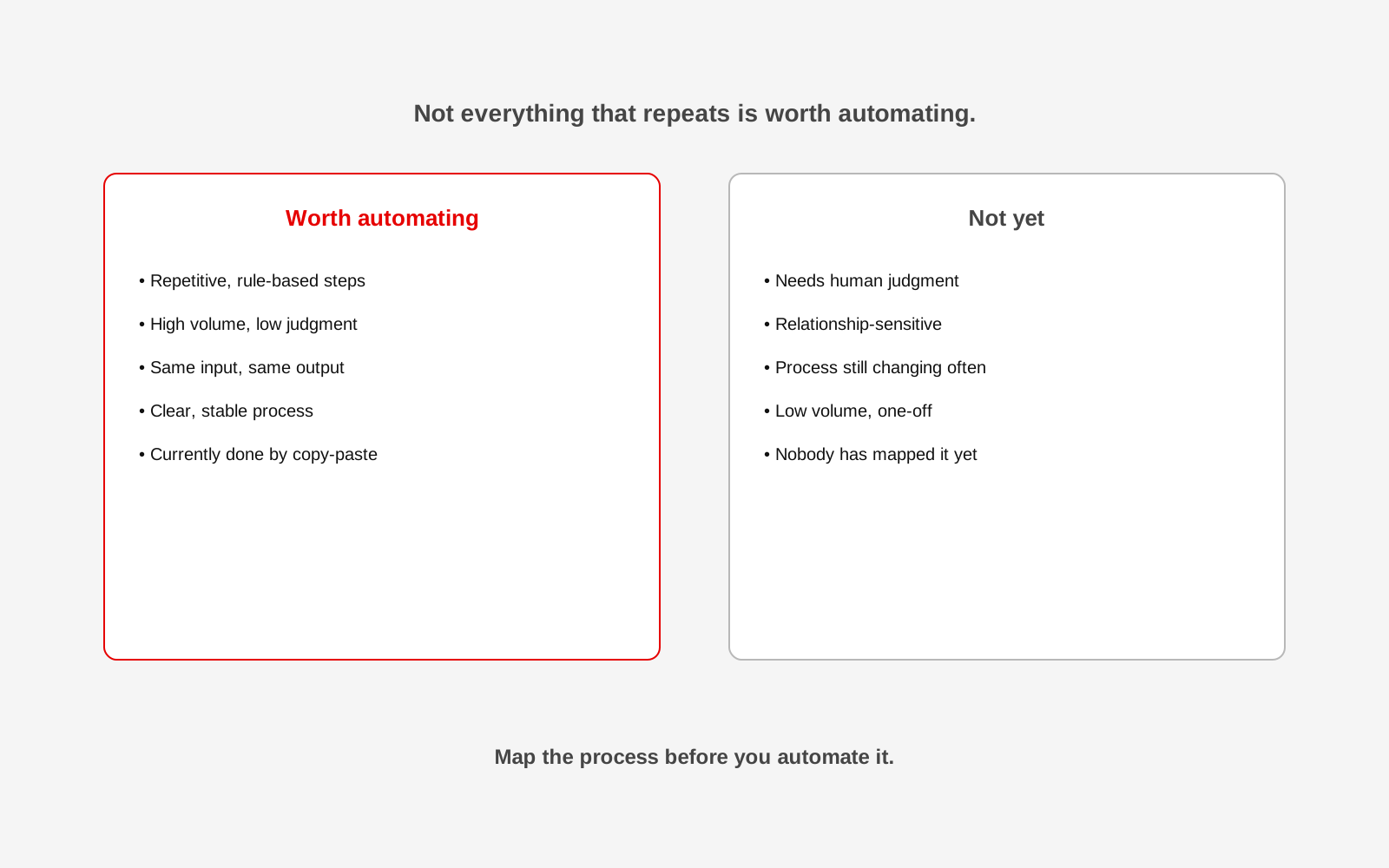
Work that is repetitive, rule-based and high-volume is usually the safest place to start: the same input reliably produces the same output, the process is stable rather than changing every month, and someone can already describe the rules clearly. If a task is currently done by copying information from one place to another, that is often a strong candidate.
Some things are not ready yet, and that is fine
Work that depends on judgment, context or a relationship with a specific person is a poor first candidate. So is a process that is still evolving, or one that happens rarely enough that building and maintaining automation costs more than doing it by hand. "Not automated yet" is not a failure. It is often the correct call for this year.
Automation still needs an owner
An automated process that nobody monitors will eventually fail quietly. Someone should own what the automation does, notice when its output looks wrong, and be able to explain the logic behind it to a colleague. A workflow that only one person half-understands is a liability, whether or not it happens to work today.
Start small and keep the exit door open
A pilot on one workflow, with a clear way to measure whether it actually saved time or reduced errors, teaches far more than a broad rollout. Keep the manual process documented and available as a fallback. If the automated version breaks, or the underlying process changes, the team should be able to fall back to doing it by hand without losing the work.
Watch what it costs to maintain, not just what it costs to build
The build is usually the cheap part. The ongoing cost is keeping the automation correct as inputs change, as the team changes, and as the underlying tools update. A small, well-understood automation that keeps working is worth more than an ambitious one nobody can safely touch six months later.
Not every efficient team needs to look the same
The right amount of automation depends on team size, how often a process runs, and how much damage a quiet failure would cause. A five-person team and a two-hundred-person department will draw the line in different places, and both can be right for where they are.
Map the process before you automate it
Studio 1947 works across data, design and technology to help teams understand a workflow properly before deciding what, if anything, should be automated. See our Data, Design & Tech work, or talk to us about your team's workflow.