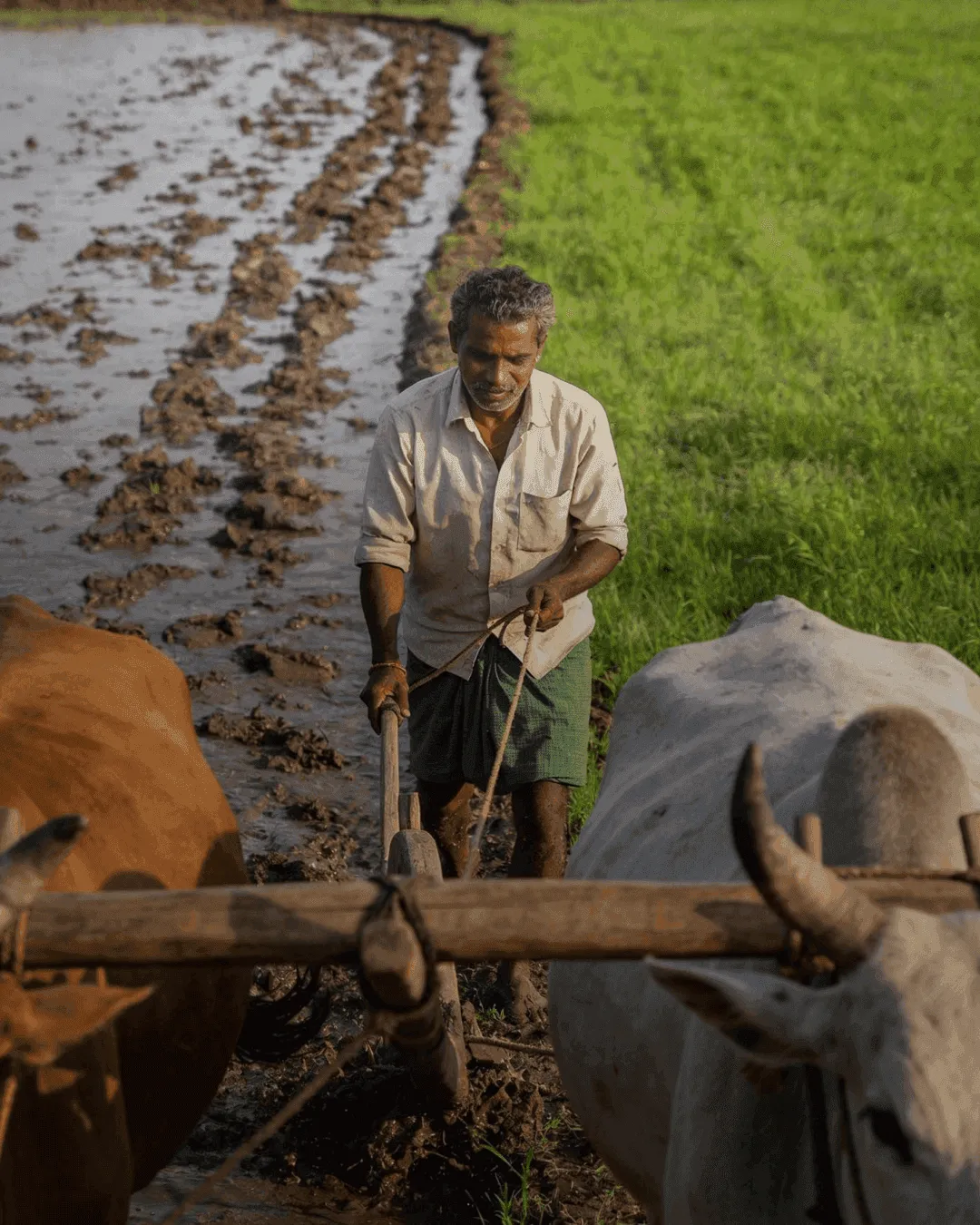
At its simplest, the plow is a tool for breaking up soil so you can plant. Early farmers across the world made them because they saw the need to loosen the earth and help crops grow. But these early plows were not just clever ideas. They grew out of local knowledge, built up over generations of working closely with the land and what it offered.
Where wood was plentiful, farmers made plows from strong branches or logs. Their curved shapes followed the contours of the earth. This eased the strain on the farmer and made plowing faster. Where wood was scarce, people used animal bones or antlers to make sharp, hard-wearing plow tips that could cut through even the toughest soil.
Local knowledge shaped more than the materials. It shaped the design too, to suit the conditions of each region. In dry climates, where saving water mattered most, plows had narrow blades that cut shallow furrows. That disturbed less soil and lost less water to evaporation. In regions with rich, well-watered soil, farmers preferred broader blades. These dug deeper and let more air into the soil.
These early plows were not only practical. They often carried symbolic and cultural meaning, showing the close link between farming and the spiritual beliefs of local communities. Many were decorated with detailed carvings, a sign of respect for the land and what it gives.
Designing for Sustainability
We urgently need more sustainable ways to farm. Climate change, shrinking resources and a growing population all demand it. The thinking behind the early plow has a lot to teach us here. If we take local knowledge seriously and bring it into how we design today, we can make solutions that are good for the environment, fit the local culture, and that people will accept.
One core idea in sustainable design is that solutions must fit their specific place and context. The early plow is a perfect example. Its design changed with the conditions and resources of each region. By studying these traditional practices, today's agricultural engineers and designers can build tools and methods that suit the local environment, doing less harm while getting more done.
The early plow also relied on local, renewable materials. That fits with the ideas of the circular economy and using resources well: two core pillars of sustainable design. Designers today can take a lead from these old practices and make farming tools and systems that favour sustainable materials, cut waste and keep materials in use.
The cultural and symbolic meaning of the early plow points to something else: social sustainability. Farming practices and local beliefs are deeply linked. When designers respect that link, they can make solutions that match the values and hopes of farming communities. That sense of ownership and cultural fit makes people more likely to adopt sustainable practices and look after them, which helps these solutions last.
The Theory: Bringing Local Knowledge into Sustainable Design
The idea of bringing local knowledge into sustainable design has backing from several fields, including anthropology, environmental studies and agricultural science.
One influential idea is indigenous technical knowledge (ITK). It recognises the deep store of knowledge and practice that local communities have built up over generations of living with their environments. Scholars such as Paul Richards and Gloria Anetor have studied ITK in farming at length. They show why modern agricultural development needs to understand these traditional systems and build on them.
Another supporting idea is agroecology. Developed by researchers like Miguel Altieri and Stephen Gliessman, agroecology looks at farming as a whole and brings together ecological principles and traditional knowledge. It sees how crops, soil, water and the rest of the farm ecosystem depend on each other. With that view, agroecology aims to build farming systems that are sustainable, resilient and suited to local conditions.
Then there is ethnoecology, which studies the close relationship between human cultures and their environments. Scholars such as Eugene Hunn and Víctor Toledo have explored how traditional knowledge shapes the way communities see, sort and interact with the natural world around them, including how they farm. When designers understand these cultural frameworks, they can make solutions that fit the worldviews and values of local communities.
The early plow stands for the lasting wisdom and adaptability of local knowledge in farming. It grew out of many different environments, cultures and societies, and its design principles still have lessons for sustainable design today. If we bring local knowledge into modern agricultural design, we can make solutions that are environmentally sound, culturally relevant and socially accepted. Ideas like indigenous technical knowledge, agroecology and ethnoecology back this approach. All of them stress the need to understand and respect the links between communities, farming practices and ecosystems.
As we take on the challenges of 21st-century farming, we should look to the past for guidance. The early plow reminds us that real sustainability needs a careful understanding of the many kinds of knowledge shaped by thousands of years of human experience with the natural world. If we use the timeless wisdom held in tools like the early plow, we can build a farming future that blends traditional knowledge with modern innovation. That means food security, care for the environment and cultural continuity for the generations to come.