Food & Culture
Brewing beer and memories
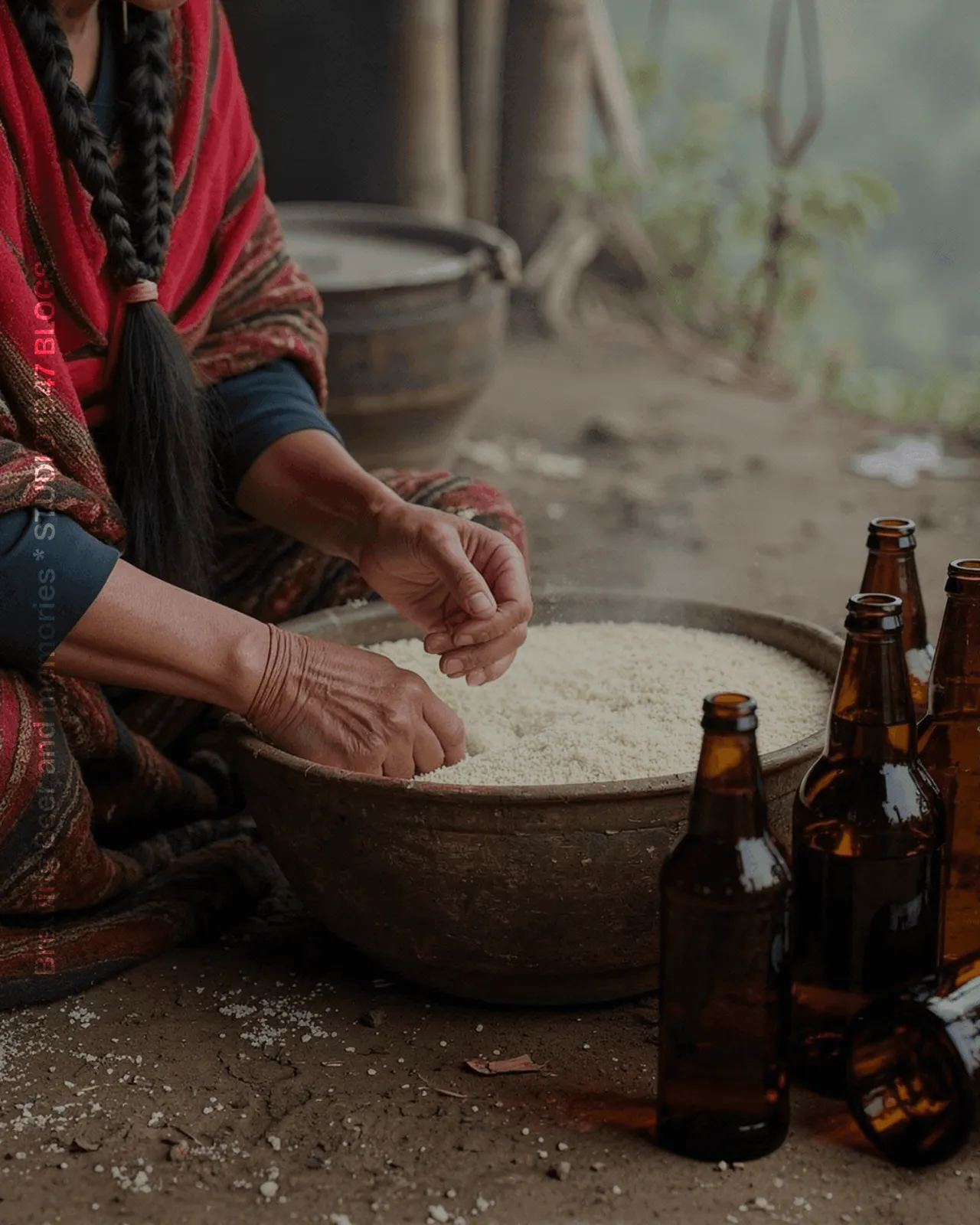
Aliya and her cousins were travelling back from Delhi to their hometown in Arunachal Pradesh. Aliya had bought two gifts for her naniapiya (father's elder sister): a jewellery box from Janpath, and a set of flavoured beer from a shop in Safdarjung, an area famous for Northeastern food. They sat on the bamboo floor and caught up. Meanwhile her naniapiya was turning rice spread on a tarpaulin sheet with an aluminium ladle.
Gifts and Flavoured Yu
Naniapiya. Ini mein nu gebane aecha gifts lowada. Aathu. Ohh. Aecha kesha mein taando! Thank you ah. Aecha aesya? Yu hunji aathu da. Aecha mein flavoured yu dumo. Yu ajihone nu aecha ma fruit flavour aetehone ichibu topra mein taando baida. Aathu aecha Kiwi chi, aecha mango flavour.
Naniapiya. We have bought gifts for you. Please have a look. Ohh. These are beautiful. Thank you dear. What is this? This looks like Yu. Yes it is. It is a set of flavoured yu (rice beer). Once the rice beer is made, it is mixed with fruit syrup and fruit flavours. Then you get a delicious fruit beer. See, this one is kiwi, and this one is mango.
Brewing Together
Naniapiya nods along. But she cannot help remembering how brewing yu used to be a household chore. It tied households together through barter and merrymaking. Yu is a must at village and community festivities. Local glutinous rice from the farm is half boiled together with red rice. Naniapiya says the red rice is Mishinge jijiko. The name may come from an indigenous variety of the species Oryza sativa, known as Jijiko, from Tirap district.
Or it may come from a variety found in Lohit district, which is closer to their own district of Lower Dibang Valley. That one is called Jijikong (Ahu), of the same species. Weekly village markets and barter could be how rice varieties and their names travelled between places.
Preparing the Rice and Yeast Cakes
When the local white rice is half boiled and mixed with the red rice, it gives off a nutty, starchy smell. The rice is spread evenly on a carpet until it has cooled well. Then the Pa is crushed into a fine powder and mixed into the rice. Pa is a rice cake that holds the yeast which helps the rice ferment. It is made from uncooked rice paste mixed with old yeast cakes or local herbs, which speed up fermentation. The paste is shaped into small disks. These keep for months.
Naniapiya's Idu Mishmi Recollections
Nga ichikihi ho nani so paku ne inane, oko ma pehiyo, pa ajigai chi. Pa ajite hiyo, aashunu ma brushutu aehiyo, aaya gibene aamegaichida. Aaya ho Pa khege ma prage lagaichi, aechaho Pa amuni babuda. Hu chi hone khepetya chiyada. Nga ichiga bihitone Bizari iiho, ayahobu nga aatiko chi nani aalombro so inyime pa ajigai da. Pa aji hone jigaiho ini yaku alombro mein jipa jeene oko chi lagaiji, aatiko chi, anapra chi lagaiji. Baha chi taju bu lagaiji, aai aene jigachida.
Buge mein ini mein Bizari ne Pa ajite hayo Dambuk ma amewdane aagugaichida. Nga hone, ichibu nani khe kani hone Dambuk bojaar aagugaichida. Bojare pa aakhahogaicha imu mein taando pa lowdane ini maanu ma dega banaba. Ini chi pa wa mosa alombro mein londogahiba. Baha aashunuge pa amehiyo, aaga kani kiku gine aegaichim.
Market Days and Adi Tribe Encounters
"When I was young, whenever we came back from our fields we would start making pa. We made enough to fill our baskets and sell in the markets. Some people came to the house to buy it, and we also went round the houses in our village. One pa sold for 1 Rs. Now it has gone up to 10 Rs. When I got married I moved to my husband's village, Bizari. I used to make pa with the village nani (mothers). We talked about our households, our childhoods, food and much more. Once our baskets were full of pa we would go to the market at Dambuk. One day we got to the market, opened our baskets and laid out our pa for customers. Suddenly everyone in the market surrounded us. It was so crowded. Hands held out money for a dozen pa at a time. It was amusing. Most of our customers were Adi (another tribe living in Siang, East Siang, Upper Siang, West Siang, Lower Dibang Valley and Lohit districts). Maybe because most of them lived in Dambuk too.
In the old days, mothers would fill baskets with pa and set off for the villages and markets in the morning. By evening they came back with two baskets of grains and pulses."
How the Rice Ferments
Once the Pa is mixed in, the rice is spread out evenly again. When it has cooled, it goes into aluminium or steel beakers. How fast it ferments depends on the temperature and the season. In winter the rice takes more than two weeks to ferment properly. In summer it can be done in a week.
Yu, Company and Simple Pleasures
People believe a little Yu helps with low blood pressure and digestion. Too much of it does harm. But it is also a core part of traditional cooking. Rice beer, Apong, Zutho, Chuwak, Yu: whatever the name, it has brought many people together in love for tribal food and culture. Back when resources were scarce and there was almost nothing to do for leisure, drinking Yu and sharing stories for a few hours before sleep was how men and women alike enjoyed the simple pleasures of life.