Data
The first line is a measurement. Evidence set end to end: what happened, how often, to whom. Read it and you know exactly one thing, and it points in exactly one direction.

About Studio 1947
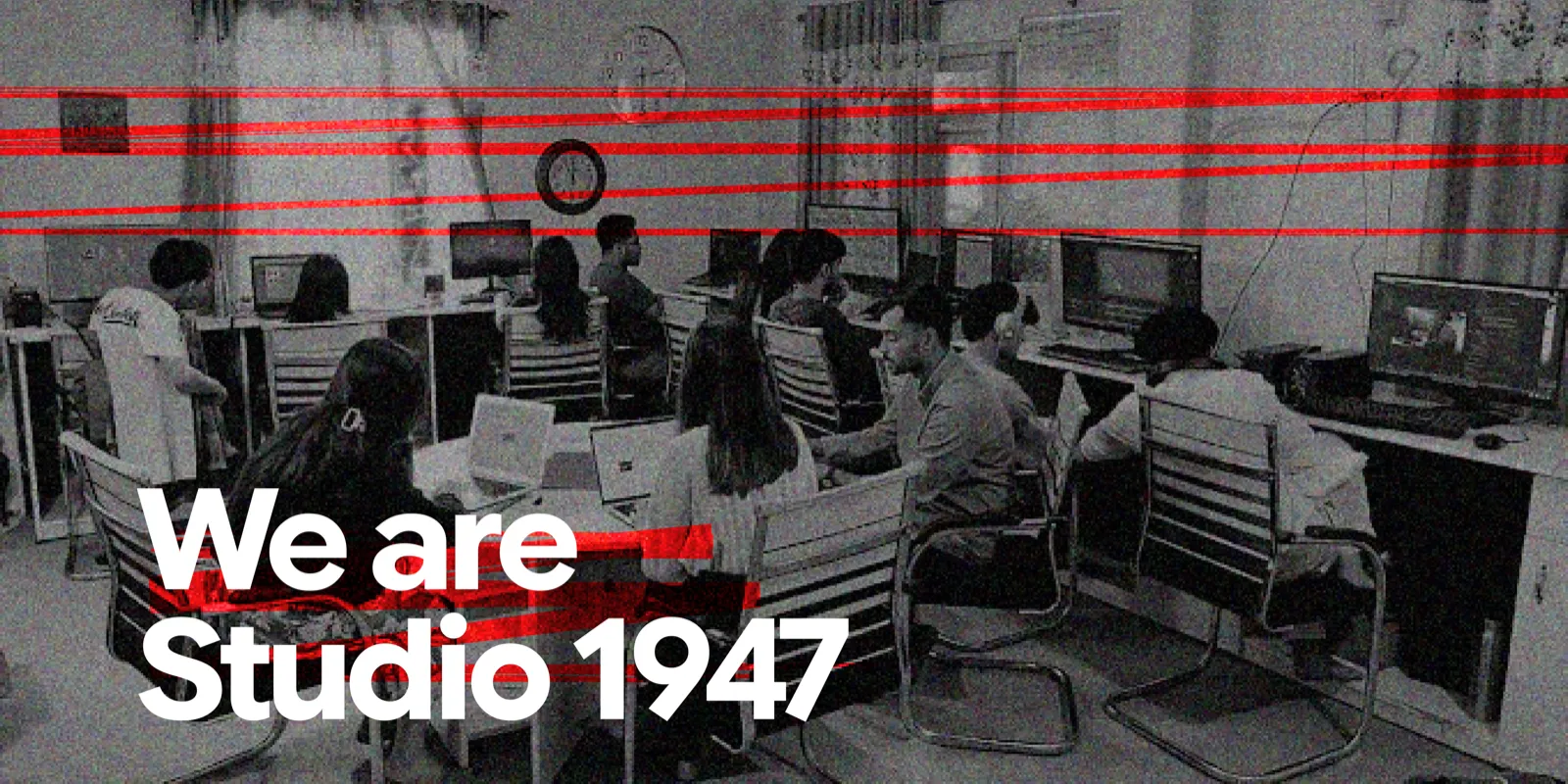
At Studio 1947, we believe high-quality consulting should be both accessible and affordable.
We are a multidisciplinary consultancy working across data, design, technology, communication and research. Based in Mirik, Darjeeling, we work with local businesses and organisations as well as partners further afield, building solutions that are practical and made to be used.
The Wheel
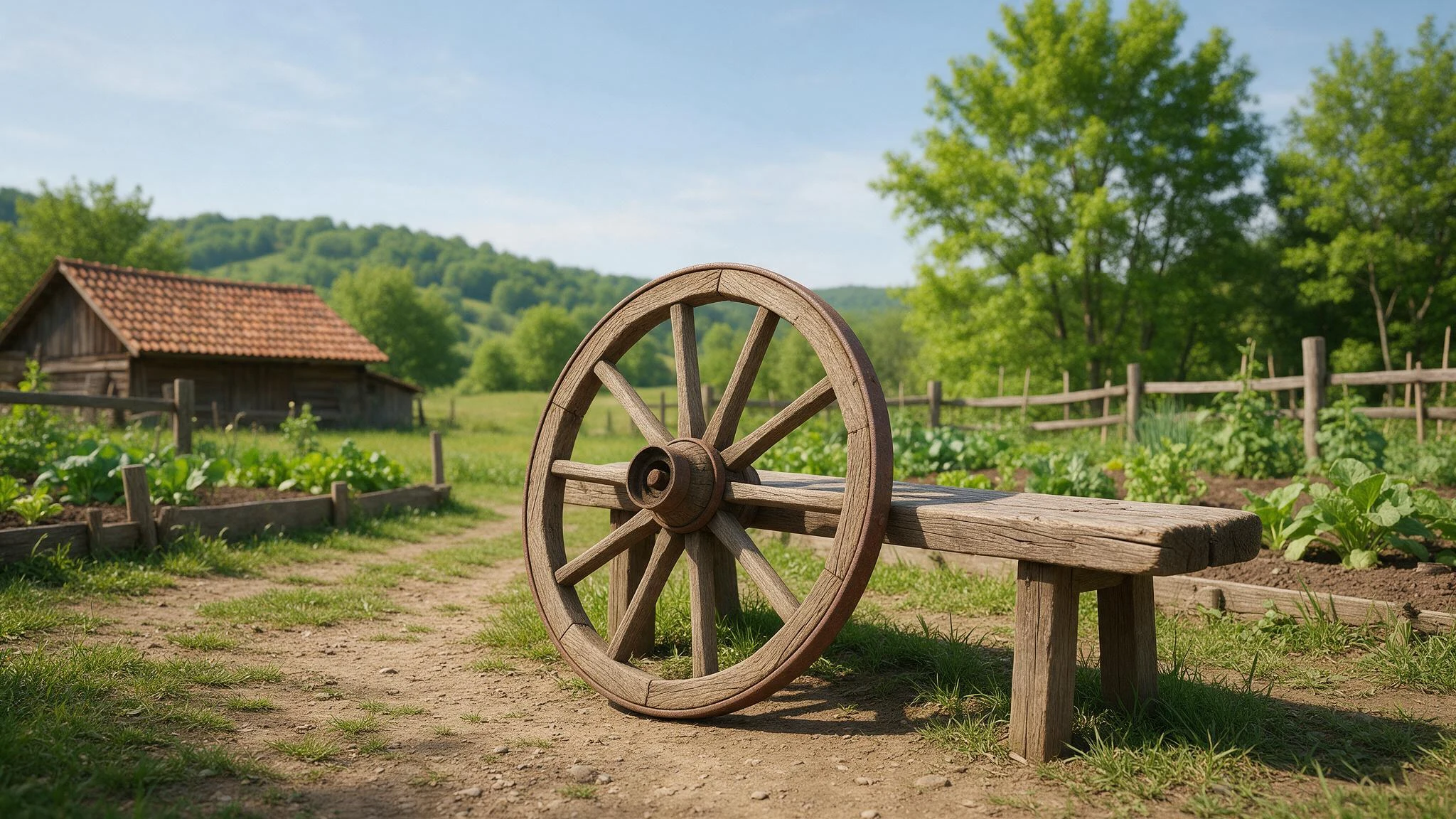
1947 was not simply the end of one chapter. It was the beginning of the possibility to build our own, and the cart wheel in Studio 1947 represents that movement.
Long before highways, algorithms and digital networks, the wheel connected people, villages, markets, ideas and opportunities. It was simple technology built around a fundamental human need: to move forward.
We see Studio 1947 the same way. We work at the intersection of data, design, technology and communication, but technology for us is never only about what is new. It is about what helps people move: from information to understanding, from complexity to clarity, and from an idea to something useful.
A wheel only works when every spoke shares the load. Our spokes are data, design, technology and communication; the hub is the community or organisation we work with. Research runs through all four, giving each one something real to work from. Co-creation is what keeps the wheel true.
The wheel also reminds us where innovation begins: not necessarily in sophisticated systems, but in solving real problems with intelligence, craft and purpose.
1947 represents a beginning.
The wheel represents movement.
Studio 1947 represents building what comes next.
Rooted in Local Wisdom, designed for global impact.
Data · Design · Technology · Communication
Our logo is not a drawing of a wheel. It is four straight lines, pinned at one point and set turning: in Mirik, at 1,767 metres. Scroll to build it, then follow where it rolls.
The first line is a measurement. Evidence set end to end: what happened, how often, to whom. Read it and you know exactly one thing, and it points in exactly one direction.
The second line gives the first a shape worth following. It decides where the eye starts, what it can skip, where it rests. Beautiful, and still just an edge.
The third line makes it run. It takes what was measured and drawn and repeats it a thousand times a second without tiring. On its own it has nowhere to go.
The fourth line is the one that leaves the building. It decides what gets said, to whom, and in what order, and whether the other three are ever noticed at all. On its own it has nothing to carry.
Lay all four through a single point, forty-five degrees apart. Four lines, eight ends: the exact spoke count of the finished mark. Nothing is added to reach it. The hub is simply the circle they all turn around.
Draw a single circle across the eight ends and the lines stop being lines. They're spokes. Nothing is dropped and nothing is invented. The wheel just closes, and reads the same however it turns.
One thousand, seven hundred and sixty-seven metres up, where the road bends back on itself every hundred yards and nothing arrives quickly. A place that teaches you to make things that travel light.
The first stretch is short. Siliguri, Kalimpong, Gangtok, the corridor where the hills hand over to the plains. Work made up there starts turning up down here, on shopfronts and signboards, in hands that never asked where it came from.
Then the buildings get taller and the briefs get longer. Kolkata, Delhi, Bengaluru, Mumbai. Same four lines, same wheel, just further to roll between stops.
Roll far enough in one direction and the ground stops being flat. Time zones turn into a scheduling detail, a studio in the hills turns out to be a studio anywhere, and the horizon closes into a circle.
A circle only goes one place. Back up the switchbacks, past the tea, to the people who built it, taught it, and are still standing on that ridge. The wheel doesn't finish anywhere. It comes home.
Take it for a turn
The construction never really leaves. Pick a line to lay it back over the mark, or just grab the wheel and spin it. Arrow keys work too.
And that is the whole idea.
Data measures it.
Design shapes it.
Technology moves it.
Communication carries it.
It leaves the ridge,
it crosses the world,
and it comes back to Darjeeling.
We the People
A team of designers, technologists, storytellers, researchers and strategists. We work together to build thoughtful solutions rooted in local wisdom and made for global impact.
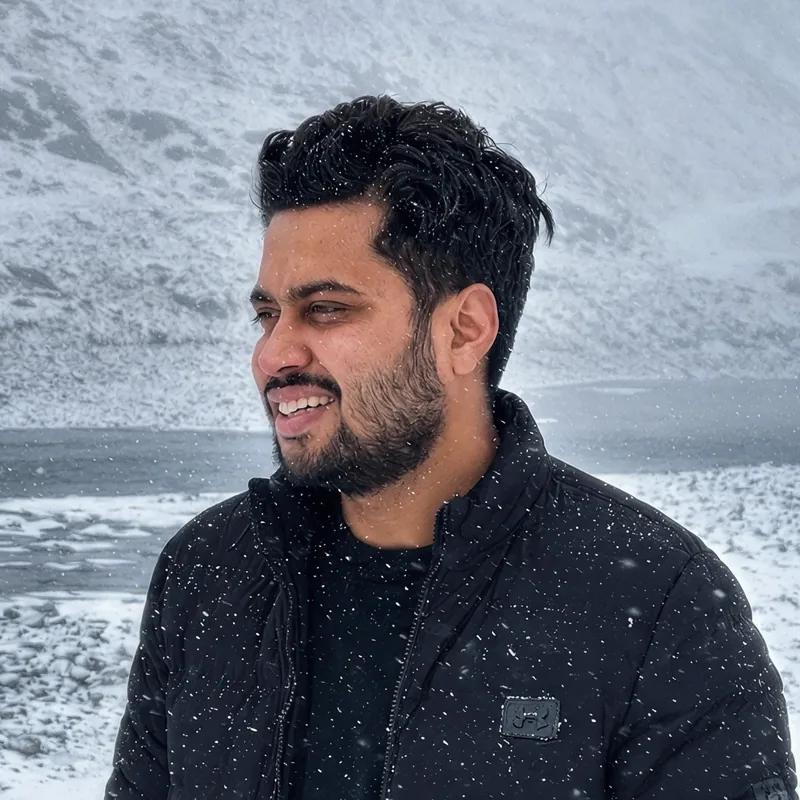
From Farmer to Designer: a journey rooted in local wisdom, shaped by global practice.
Rabi is the founder of Studio 1947, a consulting and innovation studio working across Data, Design, Technology, Communication and Research. He started the studio in 2025 with a simple belief: the most meaningful design doesn't choose between local wisdom and global relevance. It builds from both. Under his direction, Studio 1947 works with organisations to turn complex, human problems into solutions that are as thoughtful as they are useful.
Rabi's path into design wasn't the usual one. He began by studying Philosophy at Presidency University in Kolkata. There he spent his time on Indian and Western thought, logic, ethics and socio-political theory. On the side, he designed posters for college events, first by hand, then digitally. That early urge to visualise ideas eventually pulled him fully into design. He went on to earn his MA at the Srishti Institute of Art, Design and Technology in Bengaluru. There he sharpened a human-centred, ethnographic approach to UI/UX, grounded as much in listening to people as in shaping interfaces.
His career since has covered an unusually wide range of work. As Head of Design at AIcrowd in Geneva, he led visual design and product experience for AI research challenges. He worked alongside partners like OpenAI, Facebook AI, Sony, Amazon, EPFL and Carnegie Mellon University, and helped shape experiences for a global community of over 60,000 developers and AI researchers. That journey took him from Artist in Residence to the top of the design team. As Design Director at Inclusive Minds in Bengaluru, he turned to design for democracy and civic voice. He built conversation-based campaigns, design systems and data-centric dashboards for socio-political engagement. Alongside this, he has spent years as a design consultant to the Friedrich Ebert Stiftung. There he made publication layouts and cover designs for a twelve-volume research series on Artificial Intelligence, along with branding and social media work to widen its public reach.
Rabi describes his practice as sitting between product and communication design. He is equally at home mapping a user journey or building the story and visual identity around it. His toolkit covers design strategy, UI/UX design, information architecture, design systems, wireframing and prototyping, user research and journey mapping, ethnographic research, data storytelling, dashboard design, brand and packaging design, and strategic presentations. He has brought this range to organisations as varied as Tata Motors, Bosch, Room to Read, Bihar Tourism, the Seerave Foundation, and grassroots initiatives like Know Your Neighbour and the Jharkhand Government. He moves easily between global technology companies and community-rooted social impact work.
For Rabi, design and social responsibility go together. Since 2024, he has run free design workshops on design thinking, digital literacy and AI awareness, mentoring students, youth and grassroots communities. In 2020, during the Covid pandemic and the Amphan super-cyclone, he helped the Quarantine Student Youth Network raise over €300,000 to support affected families. For him, design and organising for people are part of the same practice.
At the core of it all is a simple philosophy: he believes in people and nature. He sees design not as beauty for its own sake, but as a tool for connection, storytelling and problem-solving. It holds local tradition and global systems in the same frame, and balances function with emotional depth. With Studio 1947, he's building a home for exactly that kind of work: design that aims to be meaningful first.
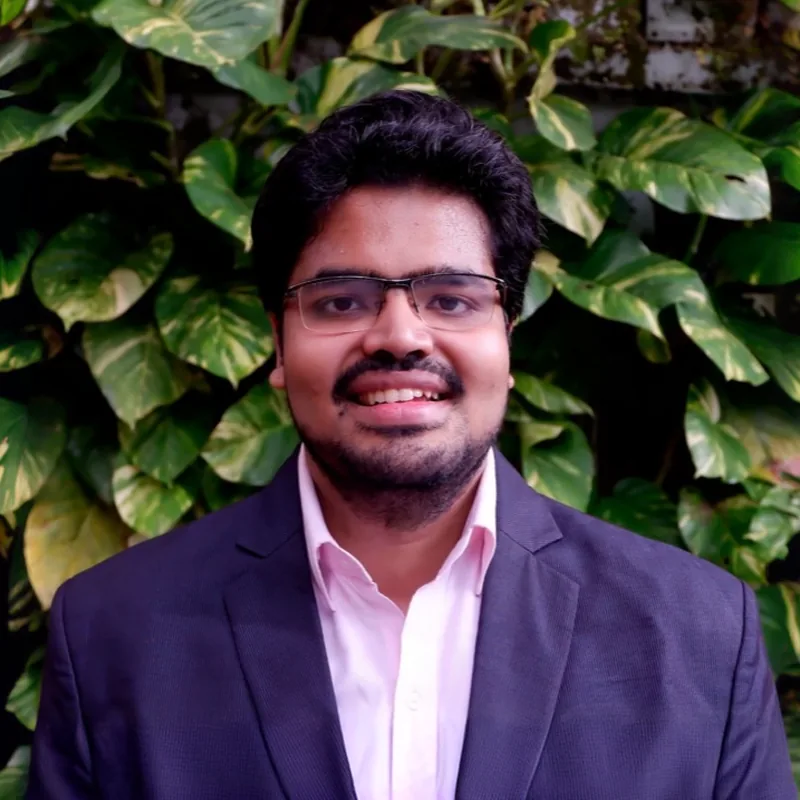
Dipam is a Co-founder and Software & AI Engineer at Studio 1947. His work sits where artificial intelligence, software engineering and digital systems meet.

Anjali Chetri comes from the quiet hills of Mirik, Darjeeling, and brings a deep sensitivity to people and systems. She graduated from Mirik College, where she studied History, Political Science, English and Environmental Studies, and she blends empathy with clear thinking. She is currently pursuing an MBA from IGNOU, which deepens the business grounding she brings to the studio. She has hands-on experience managing three retail shops, including team coordination and account handling. So Anjali understands the human side of business as much as its day-to-day running. At Studio 1947, she nurtures a culture where people feel seen, heard and trusted, making HR the heart of the studio.
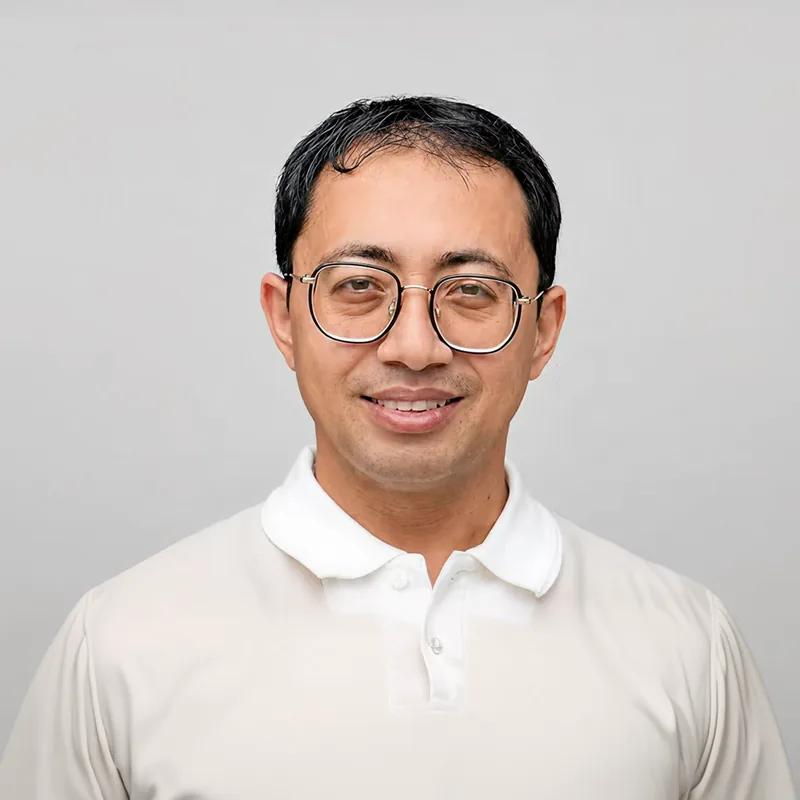
Subhendu Kundu is an experienced Ayurvedic medical practitioner with over 10 years of experience. He currently practices at Mirik Hospital. Subhendu is also a passionate curriculum designer focused on children’s health in rural communities. With a strong background in medicine and public health, he designs psychologically grounded curricula for children and teenagers.
Subhendu started with Studio 1947 as an advisor and is now a Co-founder. He shapes the programs and curricula for skill development and capacity building, bringing valuable experience in managing large-scale operations and communicating well. His deep understanding of rural health challenges, and his proven record in curriculum design, give our Skill Development Training Programs a different approach.
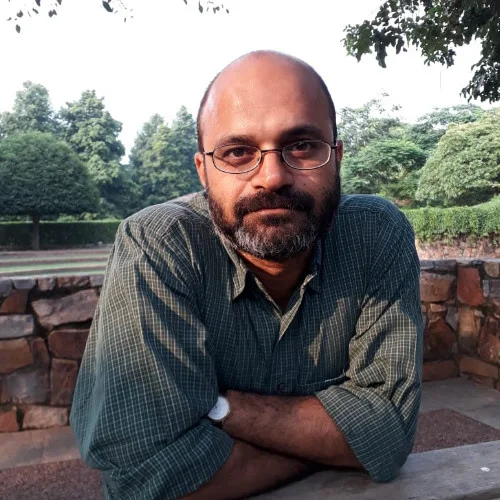
Over the last 24 years, I have worked on many themes: supporting communities to protect village commons, anti-human trafficking, child protection, working with men on gender, corporate social responsibility, and more. One key lesson from all this: the systemic causes behind most of these seemingly different issues are inter-connected, and they stay invisible in plain sight.
My core strengths are my ability to walk off well-trodden paths and to keep going against all odds. I try to live values like dignity, equality, compassion and harmony in all that I do, and to be the change that I want to see. I am able to hold space for bridging different worldviews and to create alignment.
I believe our current business-as-usual ways are not enough to solve the complex challenges humanity faces in the Anthropocene. To survive on earth, we must align with nature and transform the systems that don’t. Much of my current work explores ways of bringing about personal and systemic change, so that we can heal ourselves and our planet.
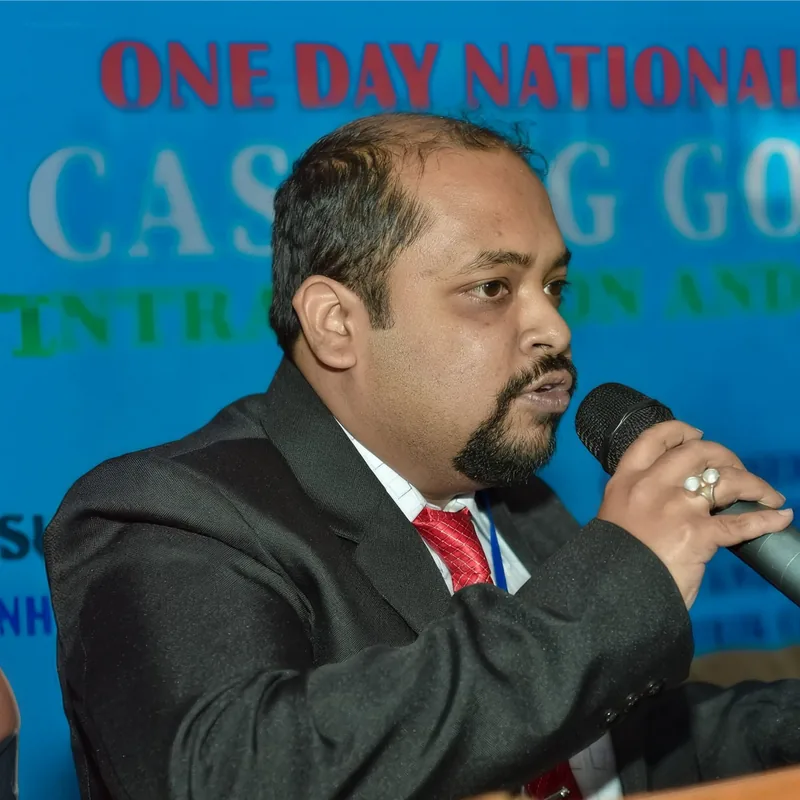
Born amid the natural plenty of Darjeeling and the Duars, Subhayu Bhattacharjee continues a legacy of learning, teaching and nurturing in the foothills of the Himalayas. He is an aspiring scholar with a PhD in Cultural Studies. His wide academic experience at Presidency University, Kolkata and various IITs prepares him to teach and research across cultural subjects, from Films and Textual Cultures to Religion and more. He is especially interested in seeing culture as a dynamic 'play' of many subjectivities.
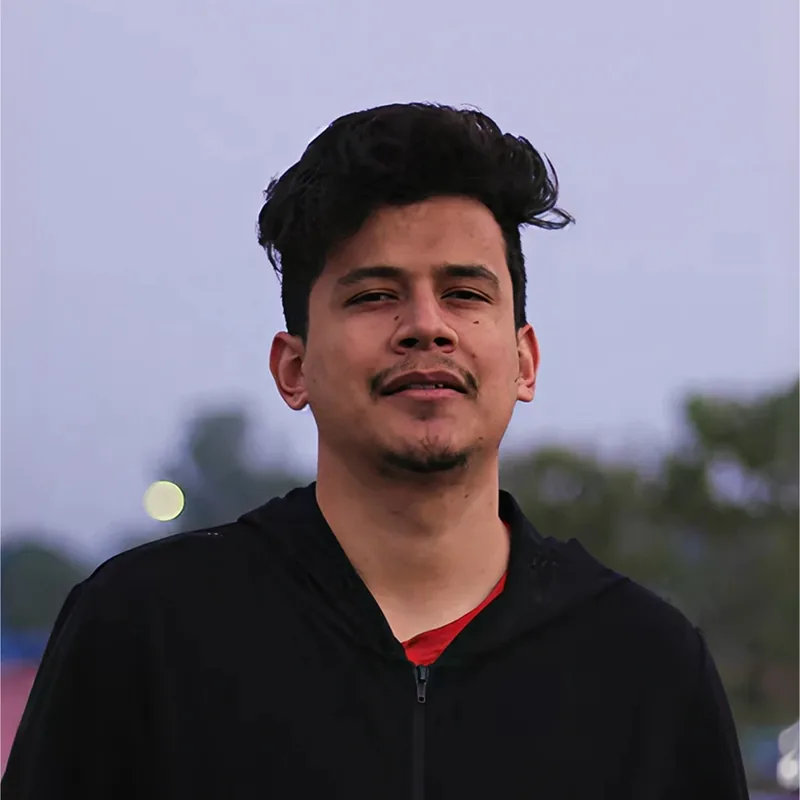
His development journey began with a deep curiosity about how things work behind the screen. What started as a hobby, tinkering with websites and building small projects, soon grew into a real passion for understanding what makes digital experiences meaningful.
Now, as Chief of Staff at Studio 1947, he uses this technical perspective to bridge strategy and execution. He plays a key role in smoothing operations and making sure the team has the structure it needs to thrive. He cares about a culture that values design and storytelling, and applies thoughtful problem-solving to help the agency deliver projects with real cultural and social impact.
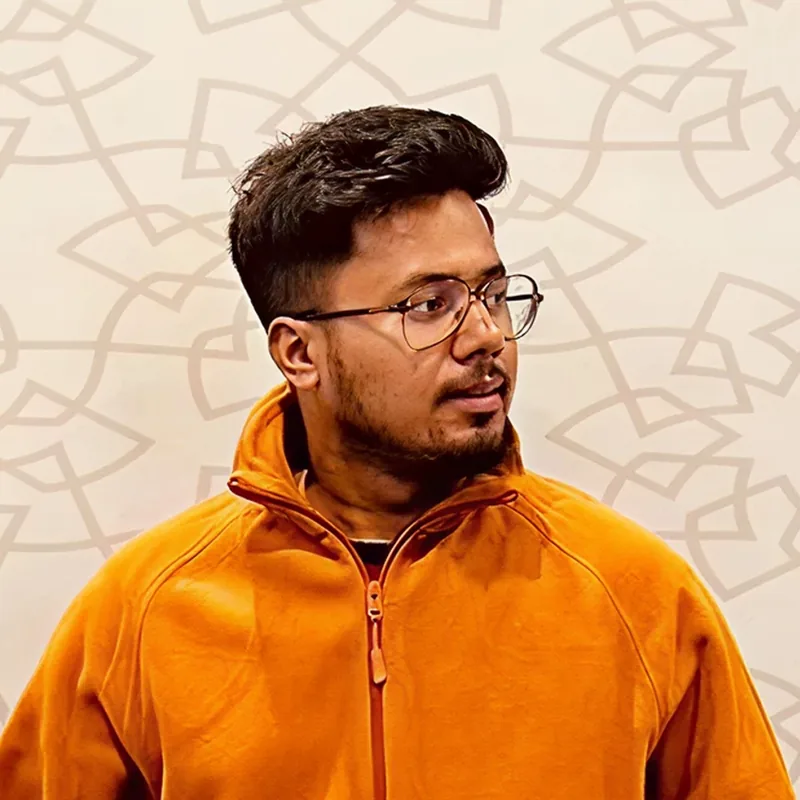
Soumic Sarkar is a Full Stack Developer at Studio 1947. He loves building web applications that scale and give real value to users. He works across frontend and backend, including React, Next.js, Node.js and MongoDB, and focuses on clean architecture, thoughtful collaboration and real-world impact.
At Studio 1947, Soumic approaches every project with a product-first mindset, making sure every line of code improves the user experience and business outcomes. He believes in balancing performance, maintainability and future readiness, whether he is designing intuitive interfaces or tuning backend systems.
He has hands-on experience leading and contributing to many kinds of projects, from portfolio platforms to banking applications, and a deep commitment to keep learning. He is certified in Data Analysis, UI/UX Design and Web Development. He sees technology not as a race for trends but as a tool to build products that work, last and make a difference.

I am a creative designer from Soureni, Mirik. I work in visual communication, video production and graphic design. I graduated in English Honours from Mirik College and did my master’s degree in English Honours at the University of North Bengal.
Alongside my studies, serving as General Secretary of my college strengthened my leadership, organisational and project management skills. My creative work draws deeply on travel, music, painting and local art traditions. That helps me make design that looks good and means something.
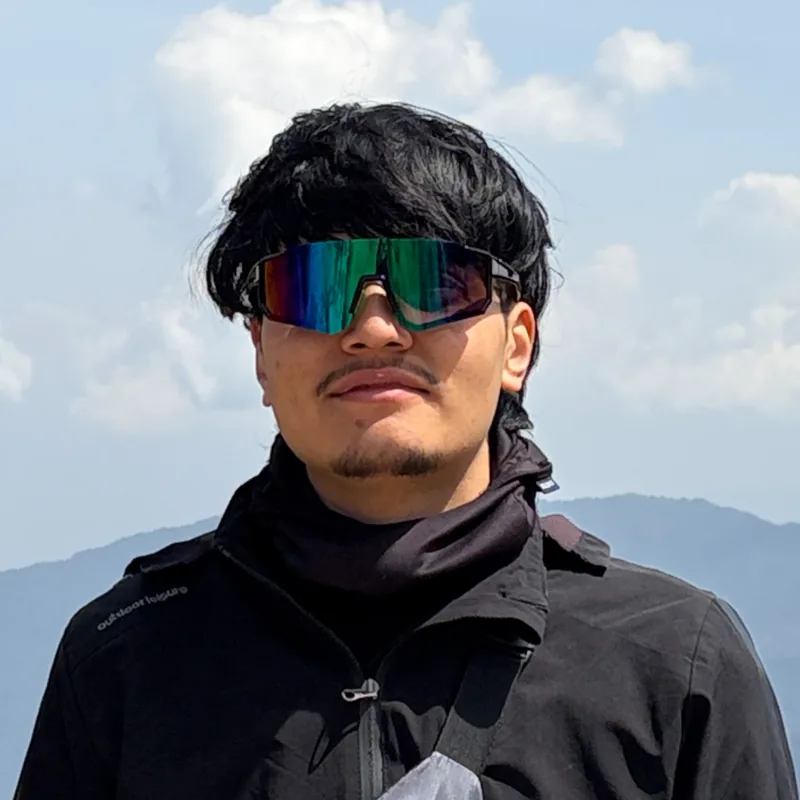
Rahul wears many hats at Studio 1947. He builds digital experiences as a full-stack developer and also shoots video and photography for the agency's client work. It's a rare mix that lets him move easily between code and camera, bringing a visual eye to his development work and technical precision to his shoots.
On the development side, he's strong on the front end with React, TypeScript and GSAP-driven interfaces, and is growing his backend skills with Node.js, PostgreSQL, NestJS and Prisma. His projects include platforms rooted in Darjeeling and Northeast India, like the 1Darjeeling local marketplace and travel guide. His eye for cinematic, editorial design shows whether he's behind a screen or behind a lens.
Outside the studio, he keeps that same creative energy going, picking up a camera for personal projects or playing electric guitar.
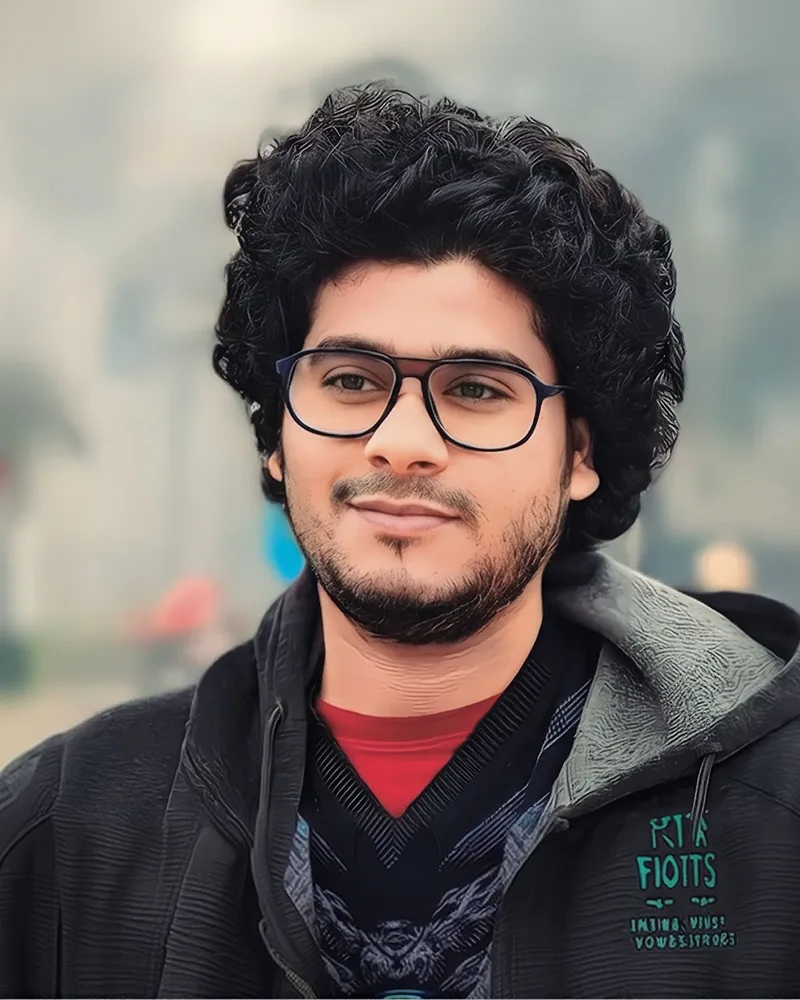
I’m a professional Video Editor and Motion Graphics Designer from Tarakeswar, West Bengal, with 4 years of experience in the multimedia industry. I’m passionate about visual storytelling and bringing creative ideas to life through editing, motion, and design.
Beyond post-production, I have a strong interest in cinematography and photography. My love for fine art since childhood has shaped the way I approach visuals, composition, colors, and creative expression.
I’m always eager to explore new ideas, experiment with visual styles, and create work that connects with people.
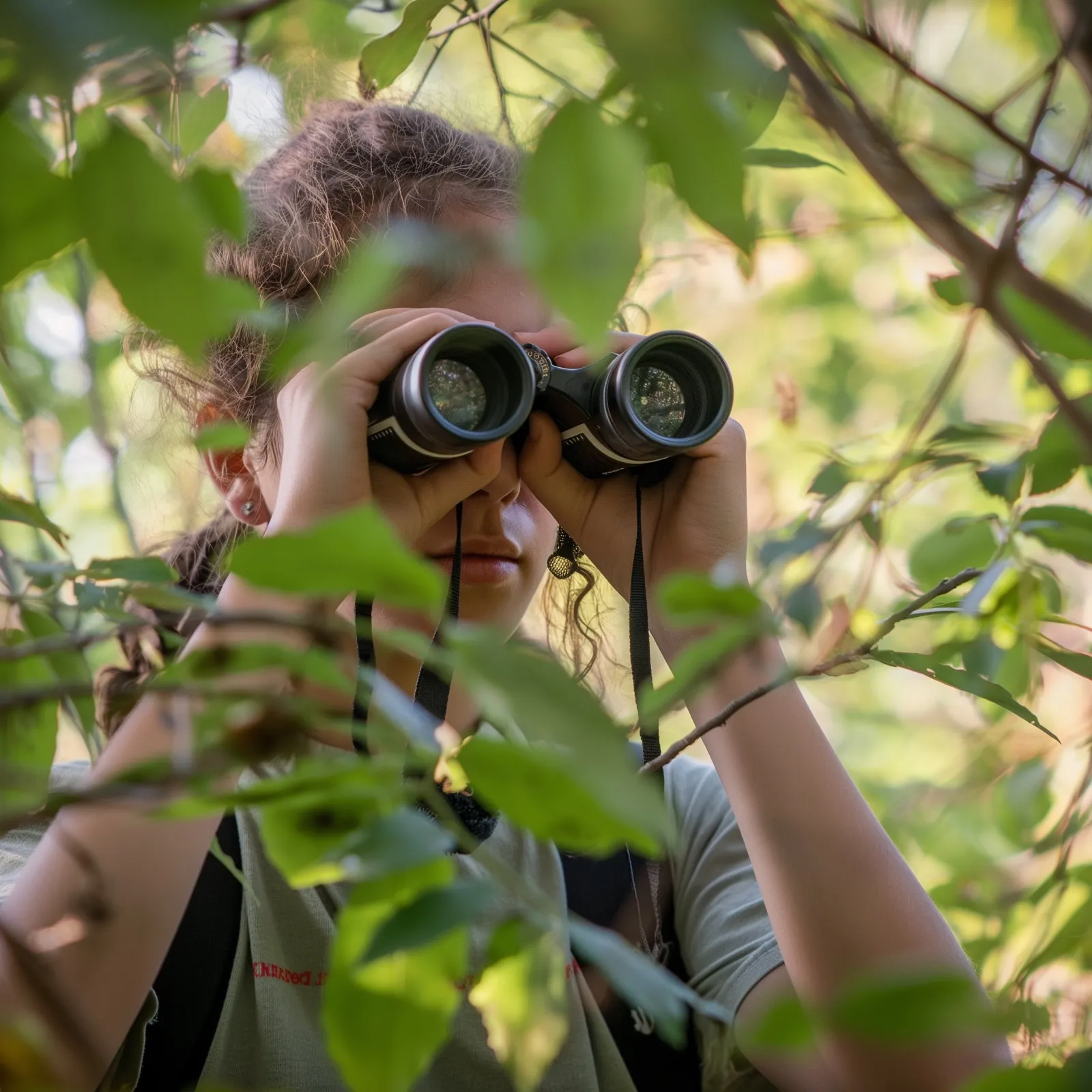
We believe
We build with people, not just for them. Every solution is shaped hand-in-hand with the communities and organisations we serve.
Every craft and every contribution matters. We respect the work, the maker, and the effort behind each outcome.
Great work comes from rested, curious minds. We protect the space to think, create, and live well.
We're hiring
We are a growing team of data nerds, design enthusiasts and tech builders making meaningful solutions from the ground up. Ready for your next big challenge?
Explore Career Opportunities