Sundargaan
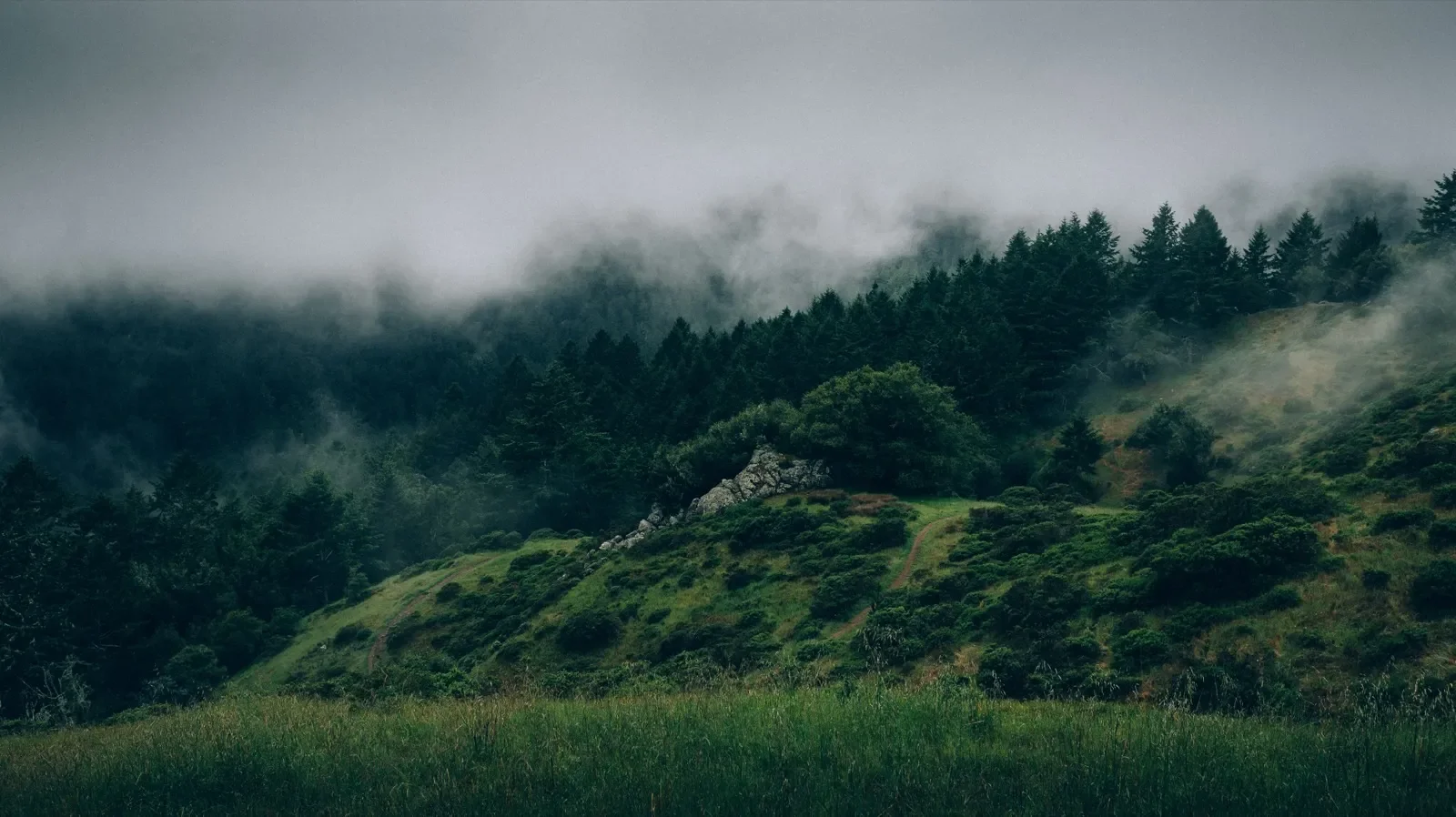
Where mangroves meet the restless tide and the land quietly holds its stories, that is where Sundargaan begins. The Sundarbans is the world's largest mangrove delta. It is also one of its richest songbooks: Bhatiyali boat songs rowed against the current, Baul mystic airs carried on a single-string ektara, Lok Geet of harvest and household, Manasha ritual verses sung for the snake goddess. None of it is written down. It lives only in memory. And with every generation that passes, part of it passes away.
Sundargaan is a living archive and cultural platform rooted in the Sundarbans. Studio 1947 built it with The Eco Logical Foundation and Sundarbaan Unayan Bhavan. We didn't design a website first. We went to the delta, sat with the artists and recorded the songs. Then we built the digital home those recordings deserved.
The Music That Was Never Written Down
Why It MattersThe delta's oral traditions are endangered, not by neglect but by time. The people who carry them are ageing. The young are moving to the cities. The rituals, work-songs and laments that once shaped life along the creeks thin out with each season. There is no staff notation for a boatman's call. No score for a potter's song. If a voice stops singing, the song is gone.
Sundargaan's mission is to change that: careful field documentation of endangered folk traditions across 50+ blocks, and a digital archive of 50,000+ songs, stories and artefacts. The people who carry them stay at the centre, and get paid fairly.
Blocks
The delta's inhabited islands and river blocks, from Hingalganj to Namkhana, each with its own musical dialect.
Songs
The scale the archive is built to hold: songs, oral histories and artefacts, all recorded in the field.
Artists
The musicians and artisans Sundargaan is built to support, through pay, credit and reach.
The Expedition: Recording the Delta
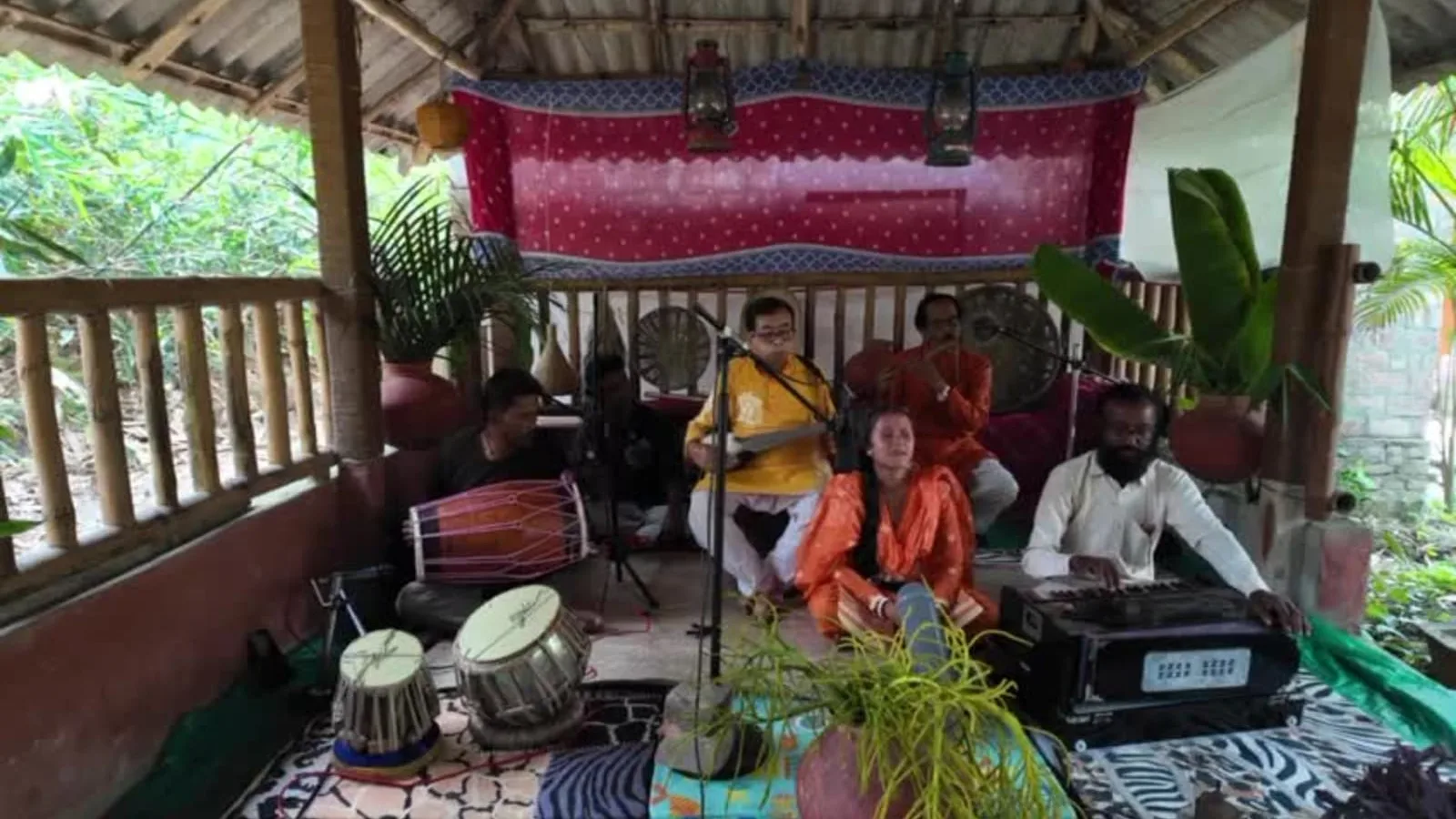
Field RecordingBefore we designed a single screen, Studio 1947 travelled into the Sundarbans with The Eco Logical Foundation's field team. We reached villages hours beyond the last road: Kalitala, Gobindakati, Jogeshganj, Sahebkhali. This is where the archive's first 38 artists, across 9 art forms, live and sing.
The recordings are the heart of the project: a Baul master of thirty-five years coaxing a century-old tune from his ektara, a Bhatiyali singer recalling the boat-songs his grandfather rowed to, the clay-potters of Hingalganj working to a rhythm older than any clock. Every track carries the singer's name, village and craft. The recording is the gift. The archive is how it is kept.
Nine Genres, One Delta
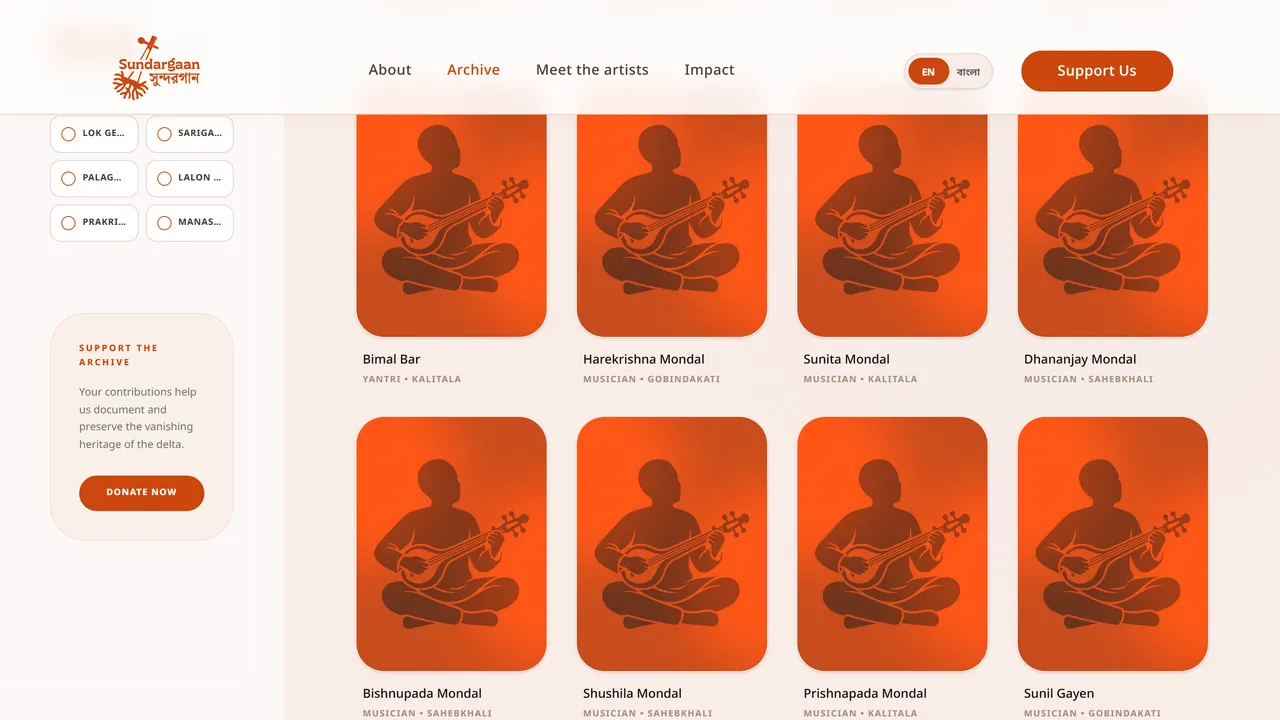
The Sound of the SundarbansEach block of the delta sings its own music. Sundargaan documents nine distinct genres. Each one is searchable, filterable, and given its proper Bengali name and context.
Boat Songs of the Tide
The rowing songs of boatmen and fishermen: long, unhurried melodies shaped by the ebb and flow of the creeks.
The Mystic Ektara
Wandering singer-mystics of Bengal, their single-string ektara and devotional verse searching for the divine in the everyday.
Songs of the People
The everyday music of the delta: work songs, wedding songs, songs of the field and the household.
Ritual Verse
Ceremonial songs for the snake goddess: among the oldest living traditions in the Sundarbans, tied to the land's dangers.
Epic Narrative Ballads
The great sung epics of the region: hours-long performances telling the delta's founding stories, including the Bonbibi Johuranama.
The Baul Canon
Songs in the lineage of Fakir Lalon Shah, carrying the Bauls' philosophy of the body, the soul, and the search for truth.
Press Play: Songs from the Field
The RecordingsThis is what the project is really about. These are the actual field recordings: the voices of the delta's artists, captured in their villages, kept for anyone, anywhere, to hear. Every play supports the artist who sang it.
A Walk Through the Platform
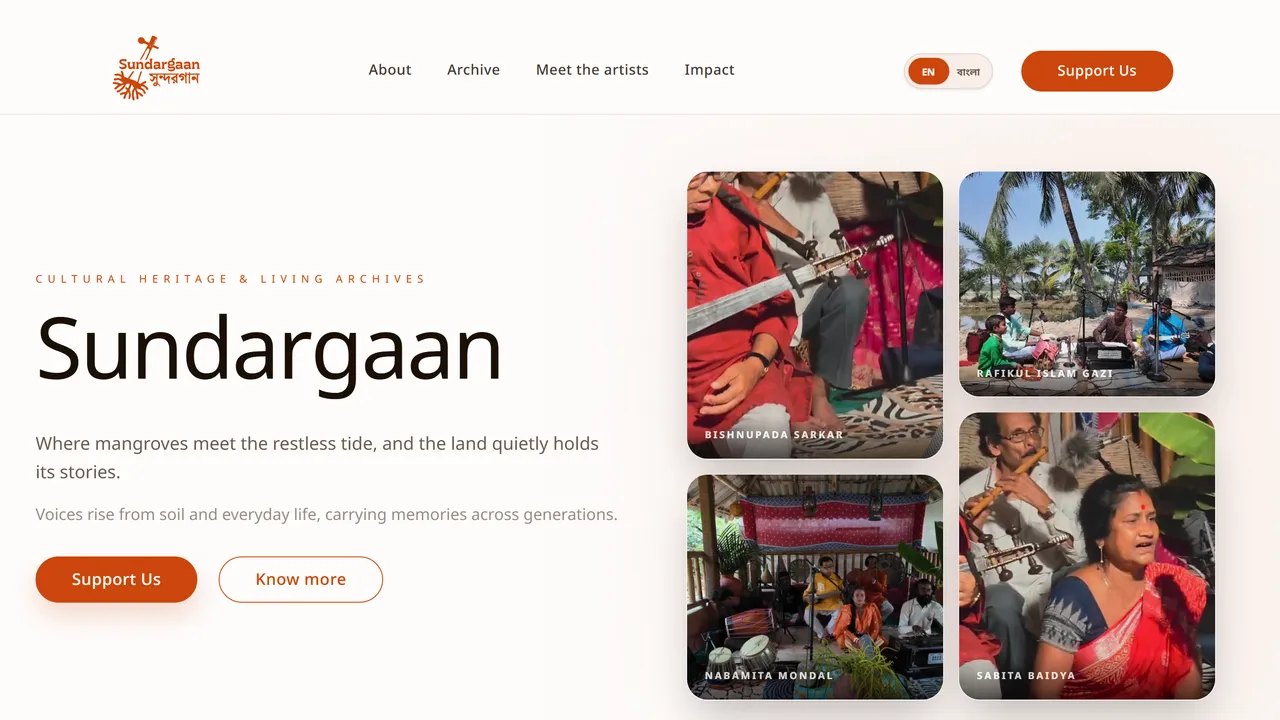
Page by PageThe website is the vessel, not the story. We built it to get out of the way (warm, editorial and fast) so the songs, the artists and the places stay at the centre.
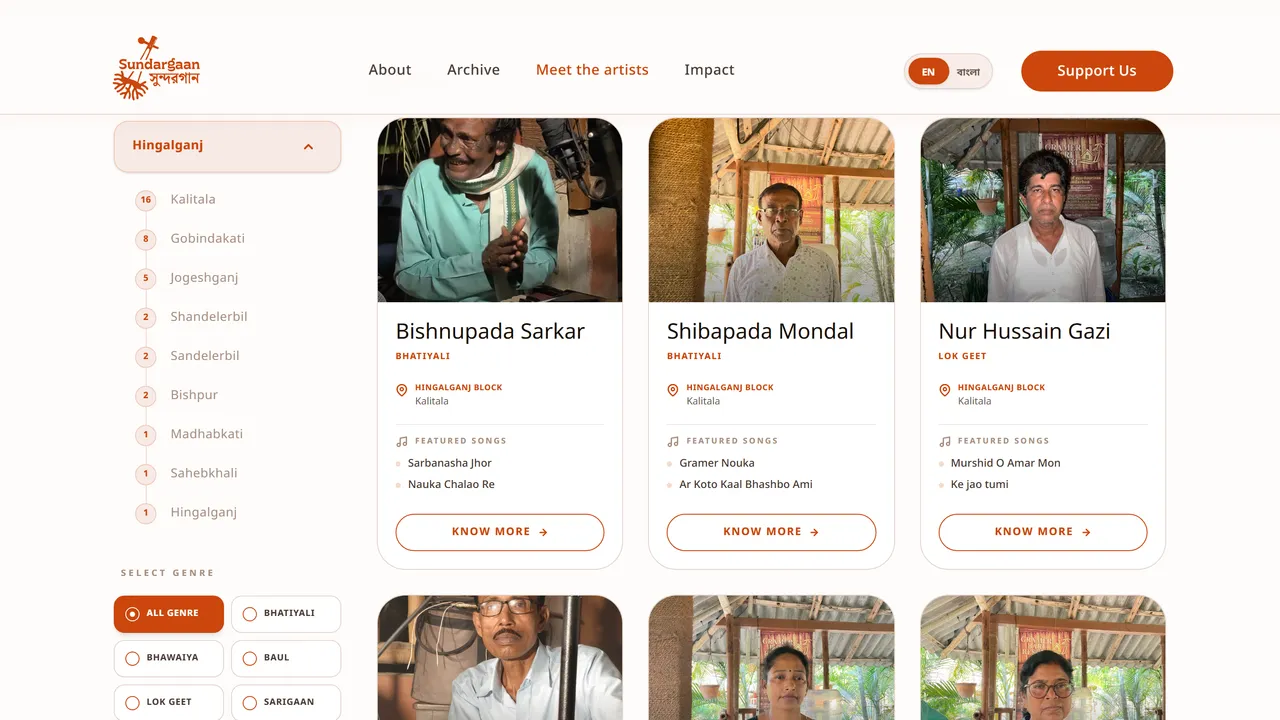
Design & Engineering for the Delta
The Digital SanctuaryThe platform is a modern React single-page app, built for the real conditions of its audience: slow connections, Bengali-speaking users, and phones in the villages themselves. The interface is fully bilingual (English / বাংলা). A serif display face for song titles echoes the region's printed heritage, and a clean sans keeps reading easy.
The palette comes from the delta itself: the burnt sienna of sun-baked clay, warm cream and deep earth ink. Search covers names, songs and instruments. Every record, artist and artefact can be filtered by block and genre. And the full archive can be explored in an immersive full-screen view.
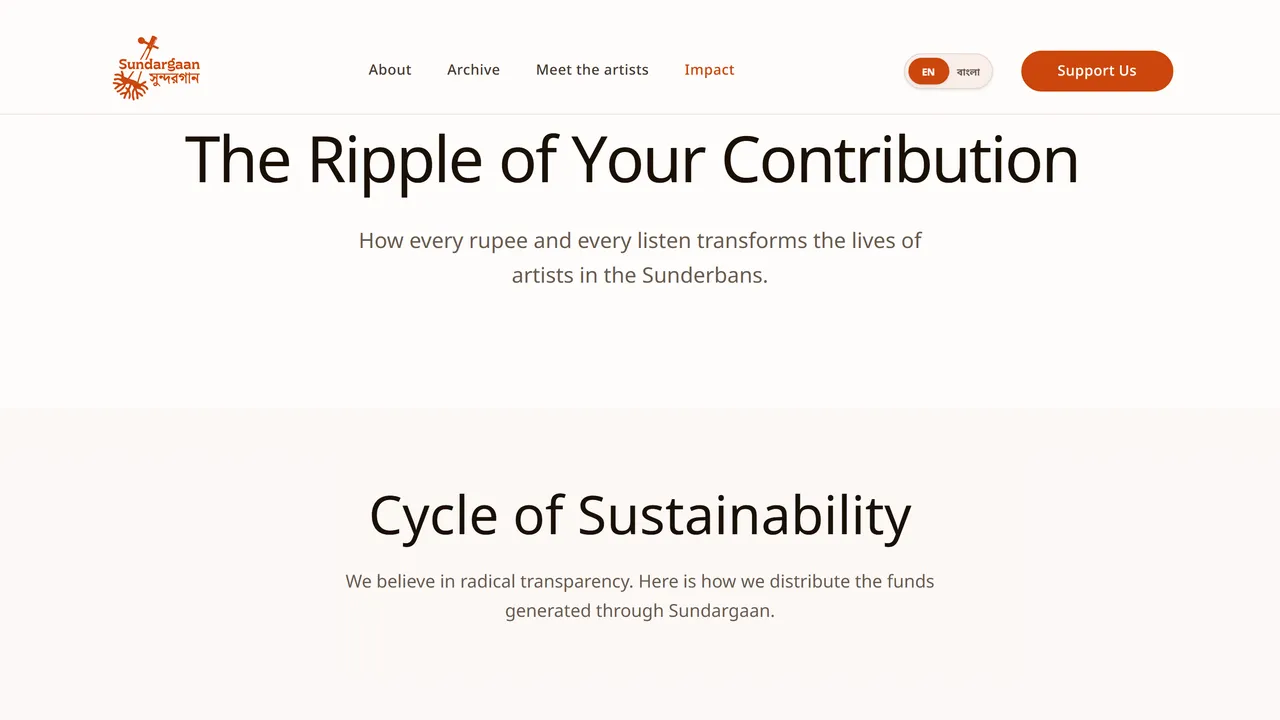
The Ripple of Every Contribution
Sustainability ModelSundargaan runs on radical transparency: the money the platform makes flows back to the people who make the music. Contributions, streaming revenue and festival fees are shared out through a clear, published model. The largest share goes straight to the artists.
Artist Share
Direct financial support, project fees and fair wages for recordings and performances, paid to the singers, players and artisans themselves.
Community
Insurance, health support and emergency funds for the artist community, and collective practice spaces that keep traditions alive.
Operations
Keeps the recording and preservation work going: Studio 1947 and the Eco Logical Foundation's field work.
Security & Health
A safety net for the people who carry the tradition, because a living archive depends on living artists.
Client Impact & Outcomes
Measuring Success- Songs Saved From Silence: The delta's first full digital archive: field recordings of endangered genres, each credited to its singer, village and craft.
- Artists at the Centre: Every track carries its artist's name and story, and the largest share of revenue goes back to them. Dignity and pay, not just preservation.
- Built for the Delta, Not the Metropolis: A bilingual, low-bandwidth, mobile-first platform that works in the very villages where the music was recorded.
- One Voice, Two Languages: A full English / বাংলা interface that honours the community the archive exists to serve.
Project credits
Client
Sundargaan
Studio 1947
Time and place
Sundarbans, West Bengal, 2026
Viewed 0 times
More work
Rajkamal Prakashan

Fermy Lab
Nest Homes
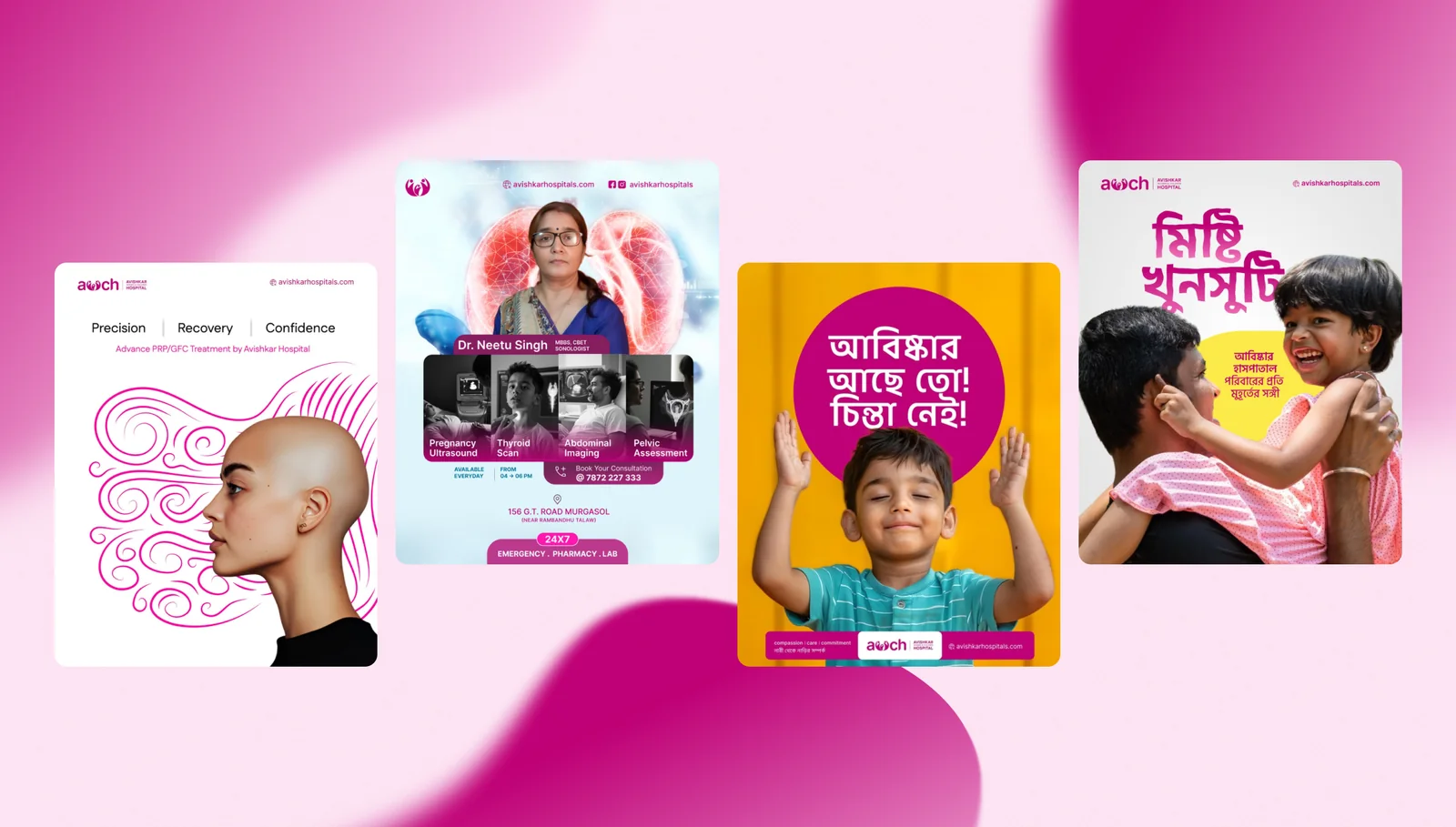
Avishkar Hospital
AIcrowd

Walking Project
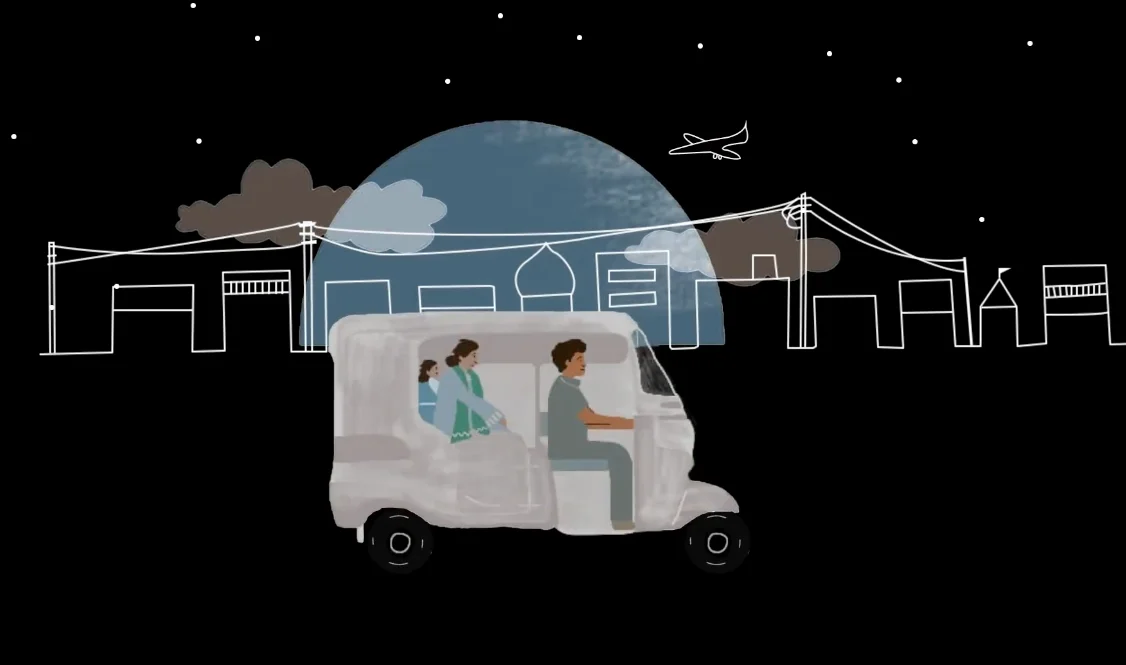
Local Futures
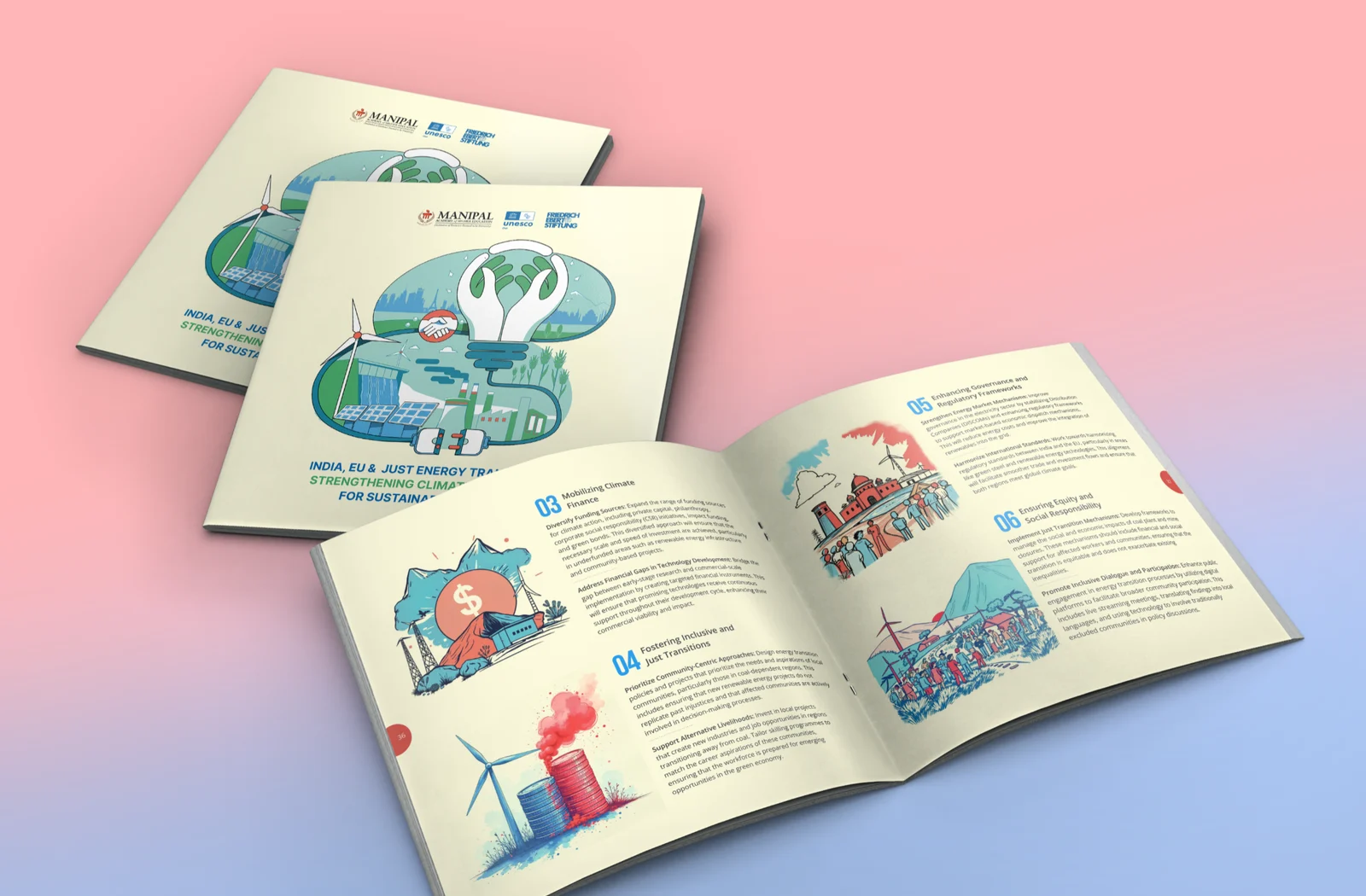
Friedrich Ebert Foundation
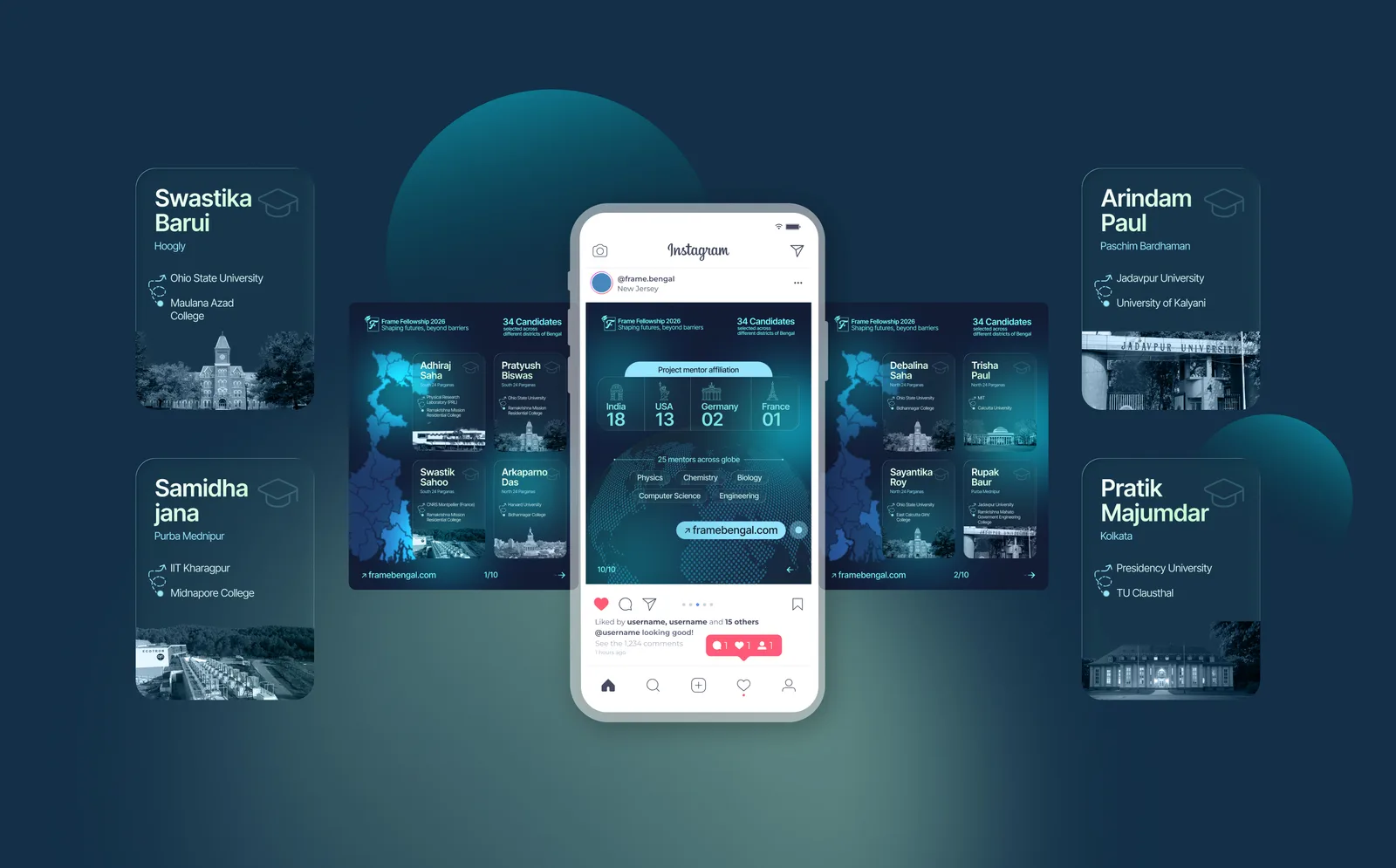
Frame Bengal
Jan Sahas
FIH Website Redesign

Remodel UN
Mirik College

Elegant Sip
Prokritir Group
Bhagyam Arts & Aesthetic
Village Ways
Radha Madhav Medical Hall

Healix
Kulam Homestay

Sikkim Himal Institute
Bhagirath Homestay